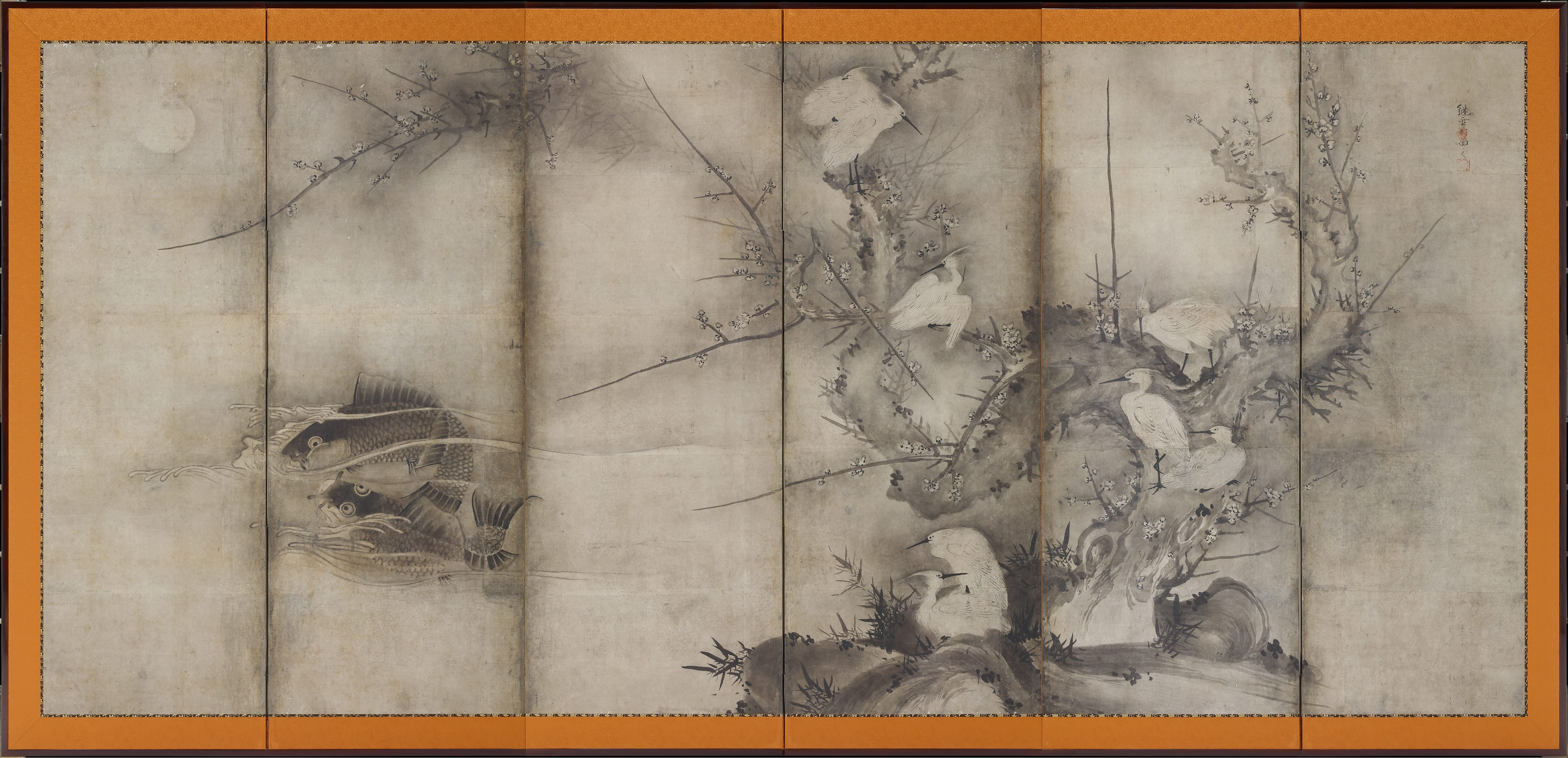
Egrets in Plum and Willow
High-resolution facsimile
- Material
- printed on washi paper
- Period of creation
- Tsuzuri Project Stage 18 2025–2026
- Recipient
- Fukushima Prefecture
Original
- Artist
- Sesson Shukei
- Historical era
- Muromachi (16th Century)
- Material
- ink on paper
- Medium
- Pair of six-fold screens
- Size
- Each screen H156.6 × W342.8 cm
- Collection
- Minneapolis Institute of Art
Description
Sesson Shukei (dates unknown) was a painter-monk active primarily in eastern Japan during the turbulent Sengoku period. Although much of his life remains shrouded in mystery, he is believed to have been born into a branch of the Satake clan, the warlords of Hitachi Province (around present-day Ibaraki Prefecture). Over the course of his more than eighty-year life, he traveled widely throughout the Tōhoku and Kantō regions, producing an exceptionally diverse range of works.
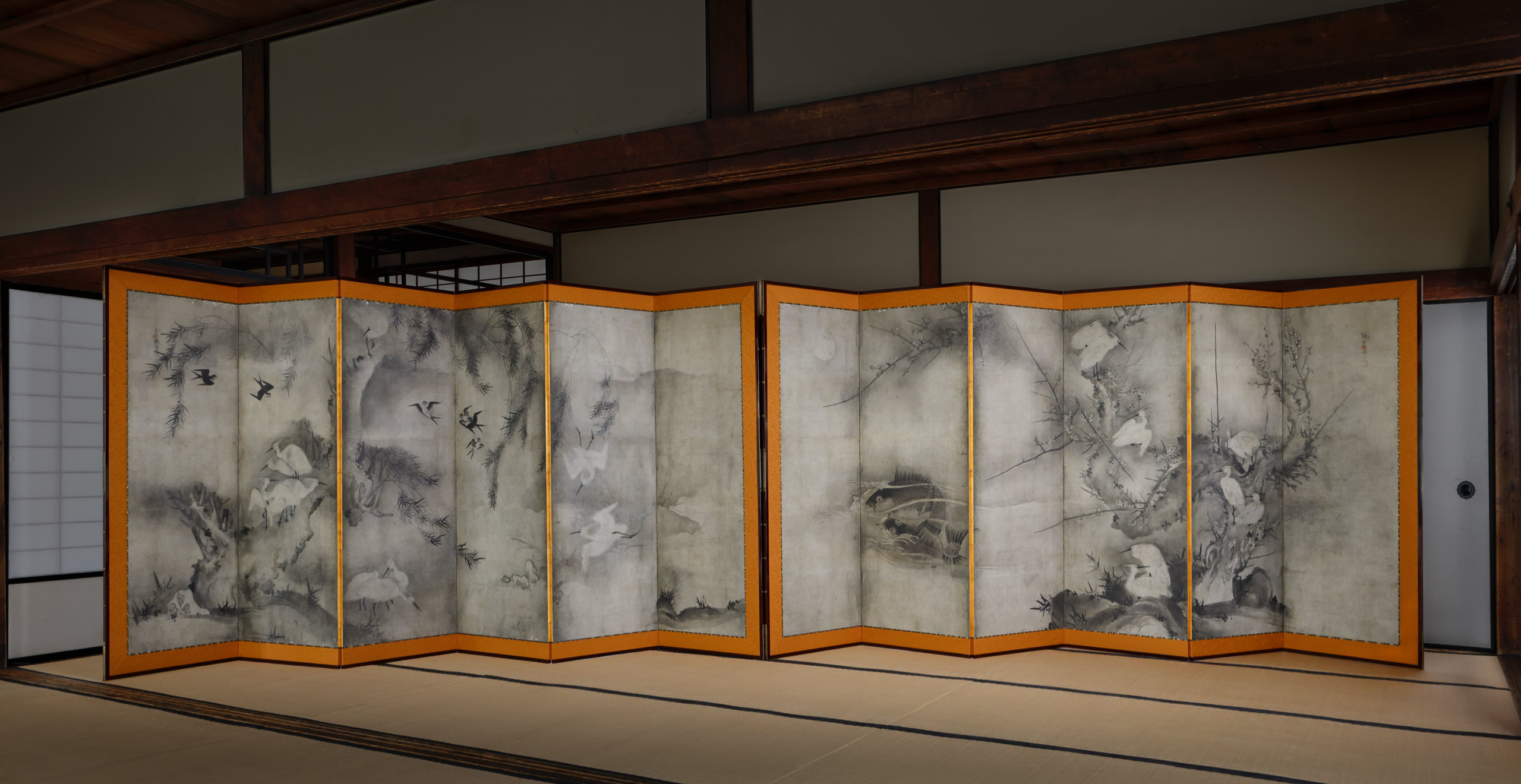
Celebrated as a forerunner of the so-called “eccentric” painters, Sesson's highly imaginative and unconventional style has long been admired both in Japan and abroad, and many of his paintings found their way overseas at an early date. Among them, this pair of six-panel screens stands as the centerpiece of Sesson works preserved in the United States.
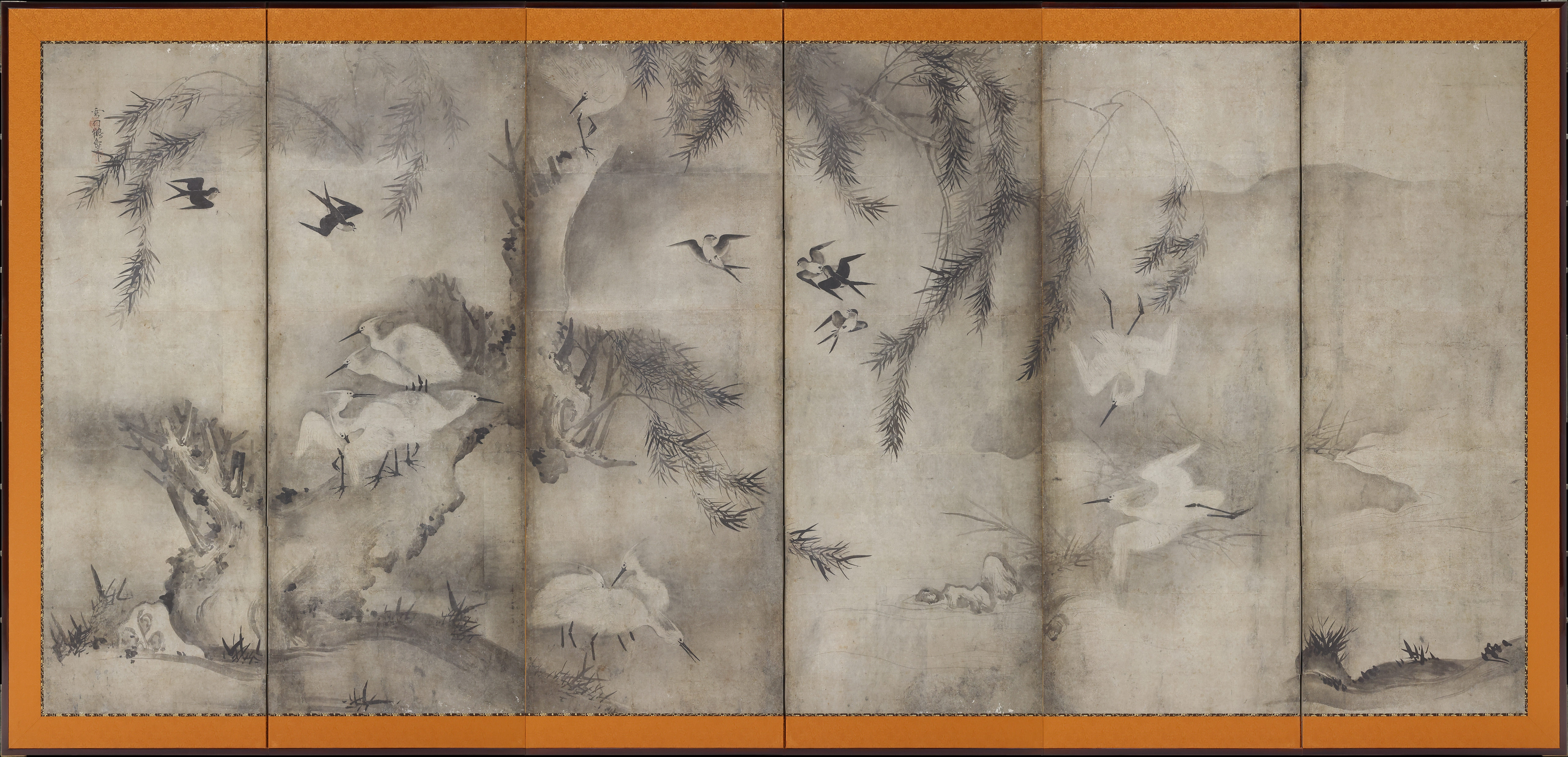
On the right screen, eight white egrets gather around a blossoming white plum under the moonlit sky, their gazes directed toward two enormous carp below. The left screen presents a contrasting scene at dawn: white egrets and swallows circle vigorously around a willow tree, enveloped in morning mist. Based on the seals impressed within the composition, the work is believed to date from around Sesson's seventies, during the height of his mature period. It powerfully reflects the sharp observation of nature and inventive conception he cultivated while journeying through the war-torn world of his age.