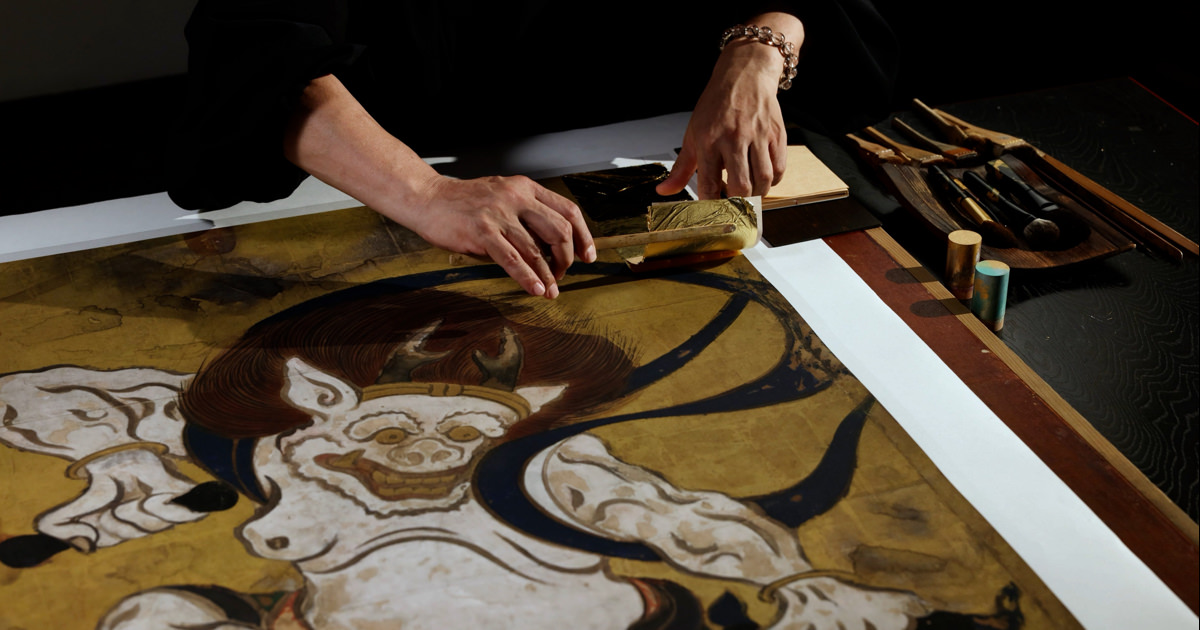
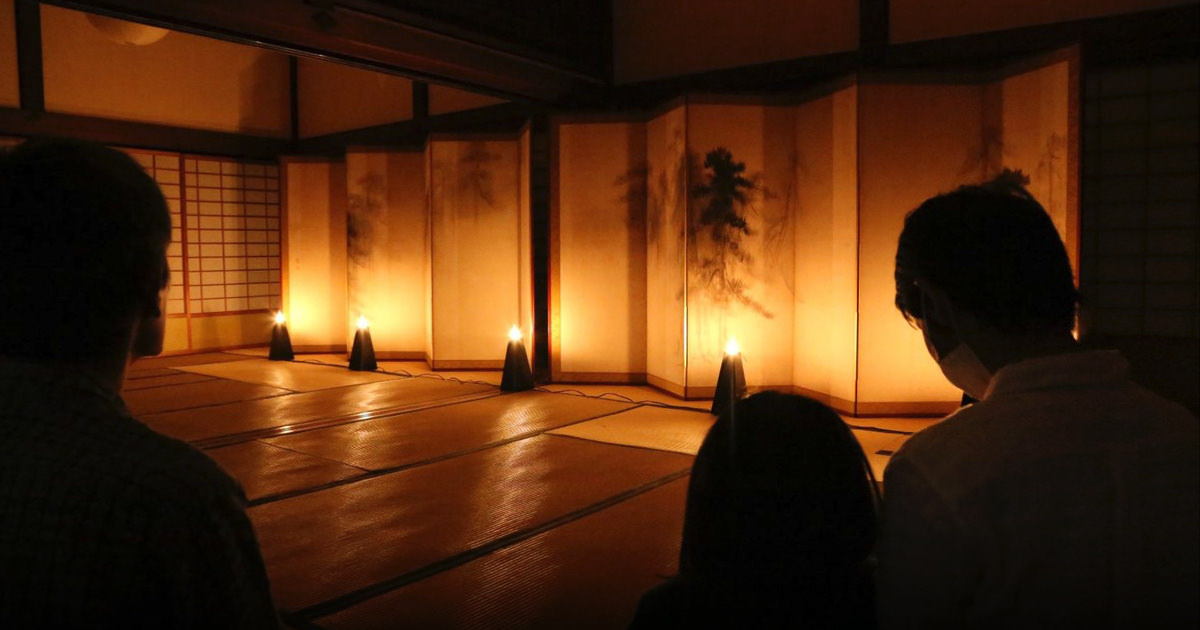
These images are based on the high resolution facsimile produced by the Tsuzuri Project. Unauthorized copying, duplication, or transfer of these images is strictly prohibited.
Maple Tree
High-resolution facsimile
- Material
- printed, gold on washi paper
- Period of creation
- Tsuzuri Project Stage 17 2024–2025
- Recipient
- Nanao City
Original
- Cultural property designation
- National Treasure
- Artist
- Hasegawa Tohaku
- Historical era
- Momoyama (16th Century)
- Material
- Ink, color, and gold on paper
- Medium
- Wall-mounted panels (a set of four)
- Size
- H173.5 × W551cm
- Collection
- Chishakuin Temple
Description
Against a gold-leaf background, a magnificent maple tree adorned with red and green leaves dominates the composition. Its thick, twisting trunk and dynamically spreading branches convey a sense of vitality and majesty, while at its base, delicate autumn flowers such as chrysanthemums and bush clovers flourish. The contrast between strength and fragility adds a lyrical richness to the scene. The Maple screens, now preserved at Chishaku-in Temple in Kyoto and designated a National Treasure, were originally created as part of the wall paintings that adorned the guest hall of Shoun-ji Temple. The temple was founded in 1591 by Toyotomi Hideyoshi to console the spirit of his beloved young son, Tsurumatsu, who had passed away prematurely. Under Hideyoshi’s command, Hasegawa Tohaku—an artist from Nanao in Noto Province—led his school in producing these grand paintings, which became a breakthrough work that rivaled the dominant Kano school of the time. Although the series of wall paintings later suffered losses due to fires and theft, they were repeatedly restored and preserved through the devotion of many hands. Today, this work is regarded as one of Tohaku’s masterpieces alongside Pine Trees, continuing to embody the essence of Momoyama-period painting.
*Japanese subtitles only
*In order to view videos, it is necessary to consent to the use of cookies by our website.
If the videos are not displayed, please click the “Cookie Settings” and accept cookies.