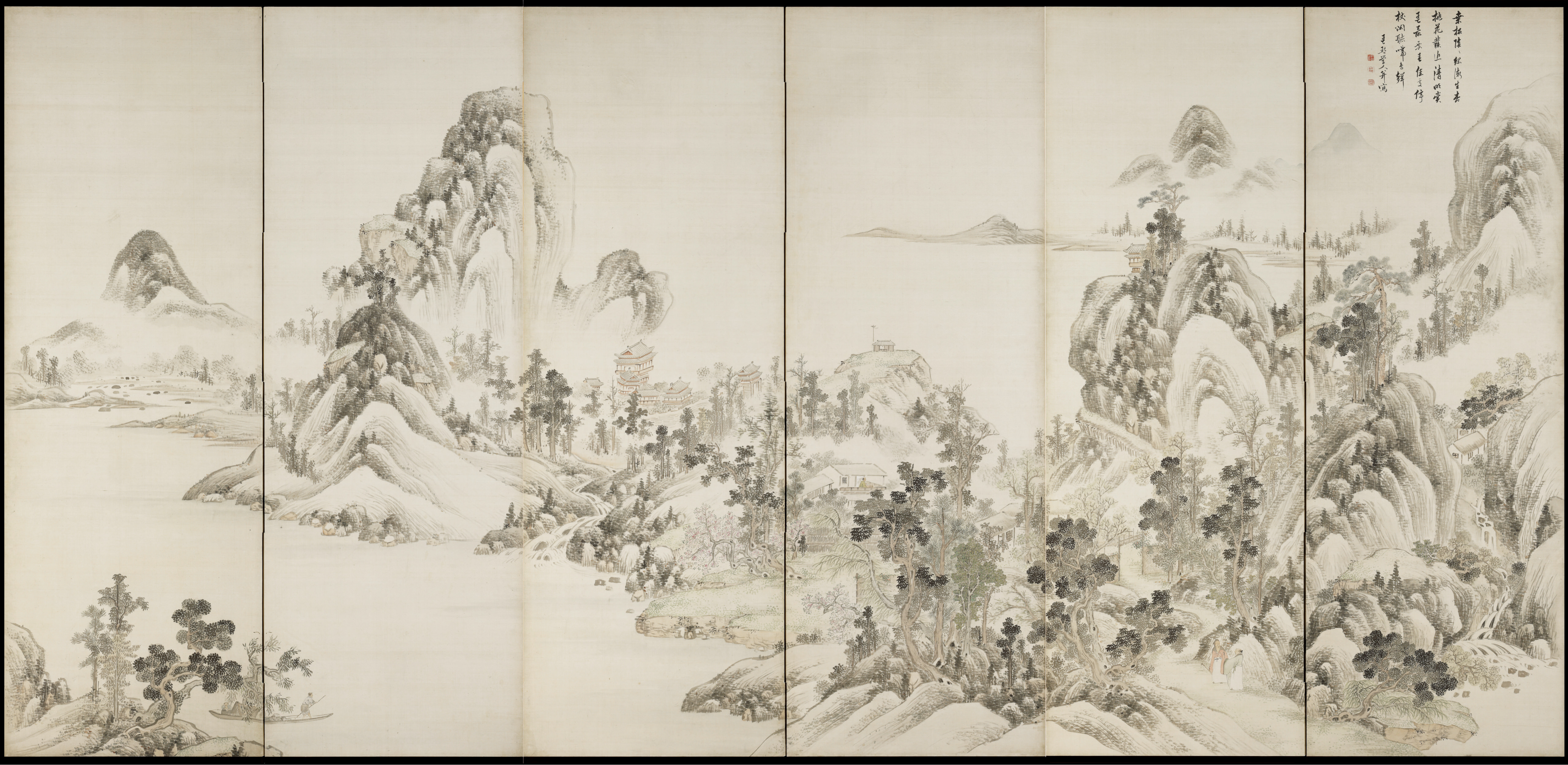
Minneapolis Institute of Art, Mary Griggs Burke Collection, Gift of the Mary and Jackson Burke Foundation 2015.79.142.1-2
These images are based on the high resolution facsimile produced by the Tsuzuri Project. Unauthorized copying, duplication, or transfer of these images is strictly prohibited.
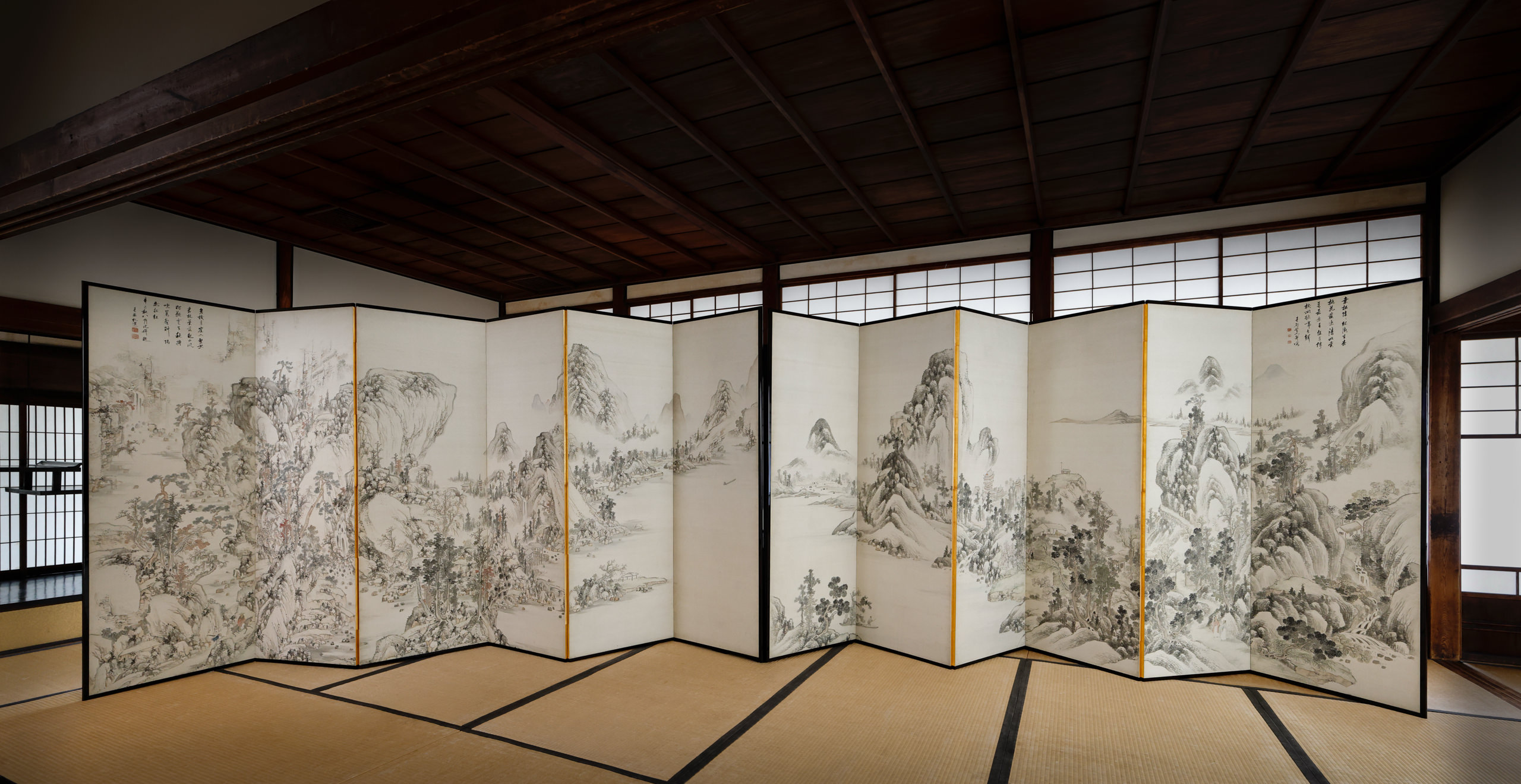
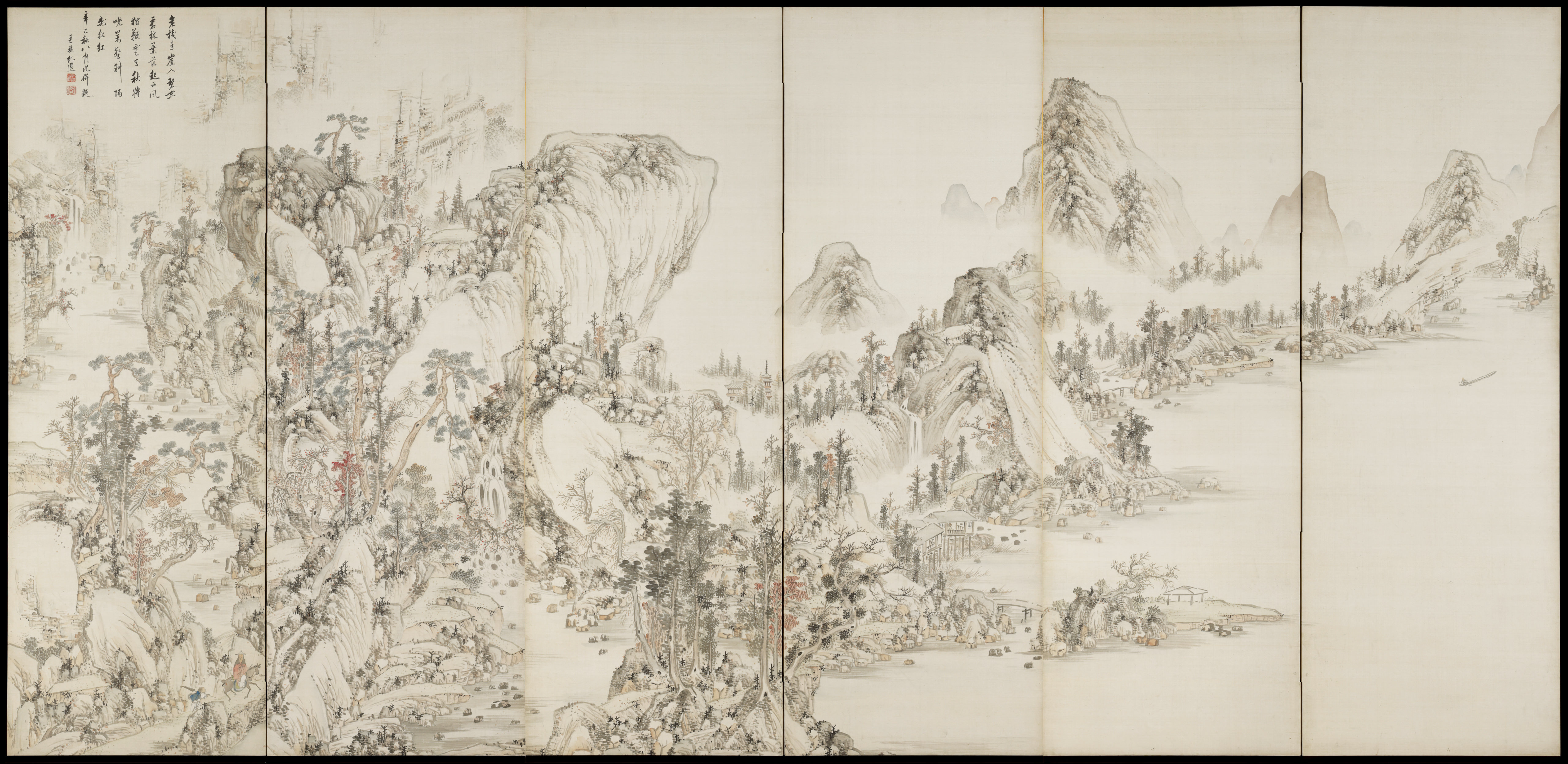
Spring and Autumn Landscapes
High-resolution facsimile
- Material
- printed on silk
- Period of creation
- Tsuzuri Project Stage 18 2025–2026
- Recipient
- Okayama Prefectural Museum of Art
Original
- Artist
- Urakami Shunkin
- Historical era
- Edo (19th Century)
- Material
- ink, light color on silk
- Medium
- Pair of six-fold screens
- Size
- Each screen H178.4 × W370.2 cm
- Collection
- Minneapolis Institute of Art
Description
Urakami Shunkin (1779–1846) was born in Bizen Province (present-day Okayama Prefecture) as the eldest son of Urakami Gyokudō (1745–1820), one of the leading literati painters of the late Edo period. Immersed in poetry and painting from childhood, Shunkin continued to refine his artistic practice after relocating to Kyoto in his thirties, eventually gaining wide recognition as a prominent literati painter.
This pair of screens is regarded as one of Shunkin's masterworks. The signature indicates that it was created in 1821, the year after his father's death, when the artist was forty-three. Surviving examples of screen paintings by Shunkin are exceedingly rare, and the use of high-quality silk further suggests that the work was produced under special circumstances, possibly on commission from a member of the upper class.
Each screen bears an inscription composed by Shunkin himself. The right screen celebrates the atmosphere of early spring—when leaves begin to unfurl, apricot and peach blossoms open, and the listener savors the season by attuning to birdsong. The left screen, by contrast, evokes late autumn: a solitary traveler moves along a mountain path as fallen leaves scatter in the west wind, and the vivid red of the setting sun piercing the valley is etched into his gaze. The poetic sentiments of these inscriptions resonate with the figures of refined scholars placed along the edges of each screen, drawing the viewer into the depths of the painted landscapes and shaping a world that interweaves seasonal transition with the quiet emotion of travel—an expression uniquely characteristic of Shunkin.