





Climate Change
Designing Energy-Efficient Products
Canon is making efforts to design energy-efficient products, to reduce CO2 emissions at customer use.
For example, for its office multifunction devices (MFD) and laser printers, Canon uses energy-saving technologies, including on-demand fixing technology and induction heating (IH) fixing technology to reduce the amount of electricity needed during operation. Furthermore, we continue to make technological advances aimed at expanding our lineup of energy-saving products. For example, we have begun employing low-melt-point toner in new products, enabling fixing at lower temperatures than traditional toner.
Energy-saving Product Design
Environmentally Conscious Designs for Office Equipment
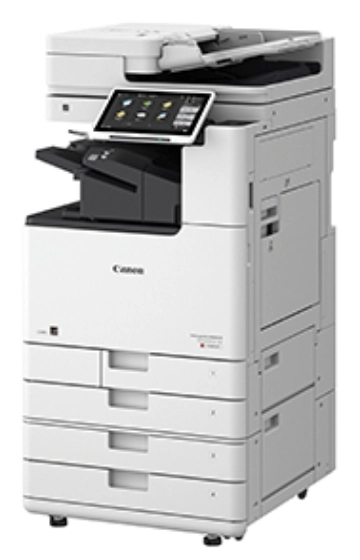
Aiming for even lower power consumption, the imageFORCE C5100F series of office multifunction printers (MFPs) are equipped with multiple energy-saving technologies, including on-demand fusing, low-melting-point toner, and sleep mode power control. These technologies have enabled the printers to meet the Imaging Equipment Specification Version 3 of the International ENERGY STAR® Program. For example, the 40ppm*1 model (C5100s) achieves a standard power consumption (Typical Electricity Consumption*2) of 0.38 kWh, a reduction of approximately 15% compared to the previous model (C5800s), which had a power consumption of 0.45 kWh.
The series also uses more than 30% recycled plastic (PCR material) for the plastic material of the main housing. Also, the lifespans of the consumables have been extended compared to previous models, by about 108% for the developer*3, by about 24% for the drum units*3, and by approximately 42% for the common materials and fuser units*4. This reduces the number of times parts need replacing and helps to lower the use of new resources. In addition, the toner discharge port has been narrowed and a movable shutter installed, resulting in a design that is more amenable to resource efficiency and easier reuse.
- ※1 Number of printable pages per minute
- ※2 Products compliant with the International Energy Star Program
- ※3 For black products and materials
- ※4 Common black and color materials
Nanoimprint Lithography (NIL) Technology Enables Significantly Lower Power Usage
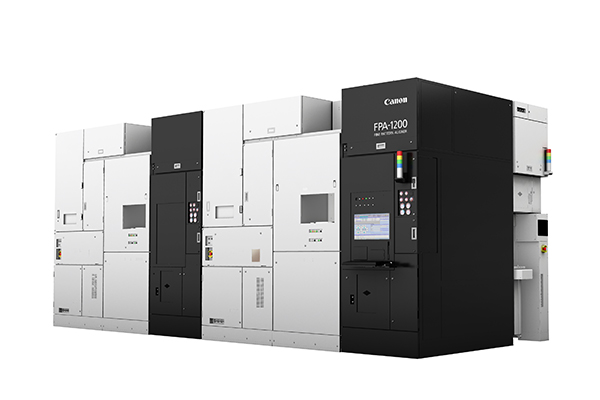
In the field of semiconductor manufacturing equipment, Canon has achieved miniaturization at lower power consumption and lower cost with nanoimprint lithography (NIL), a new technology that is an alternative to conventional lithography technology. By enabling the inexpensive production of chips with circuit resolution of 14nm, NIL is poised to revolutionize the semiconductor industry. The radical simplification of the chip production process using NIL reduces power consumption by up to 90% compared to existing lithography process for advanced logic chips. Our efforts to address calls from society to achieve carbon neutrality while also realizing both economic efficiency and sustainability have been recognized; NIL received the top Grand Prize at the 33rd Global Environment Awards in 2025.
- * Award program established in 1992, with special cooperation from the World Wide Fund for Nature Japan, for recognition of the industrial sector aimed at "coexistence between industrial development and the global environment." The program is supported by the Ministry of Economy, Trade and Industry, Ministry of the Environment, Ministry of Education, Culture, Sports, Science and Technology, Ministry of Land, Infrastructure, Transport and Tourism, Ministry of Agriculture, Forestry and Fisheries, Ministry of Internal Affairs and Communications, Japan Business Federation (Keidanren), and Japan Chamber of Commerce and Industry.

Calculation and Disclosure of Carbon Footprint of Products (CFP)
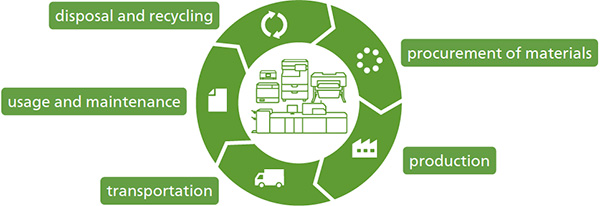
We utilize the LCA approach to help estimate the life cycle CO2 emissions of Canon products. Life cycle is divided into five stages (procurement of materials; production; transportation; usage and maintenance; disposal and recycling), and we utilize LCA to calculate GHG emissions for each stage, which are converted into CO2 equivalents. The CFP is a visualization tool, helping to identify emissions-intensive processes to help us design Canon products that are more energy efficient.
Additionally, to enable customers to Identify product environmental impact categories including CO2 emissions, we work to disclose relevant information based on the SuMPO EPD framework*1 under the SuMPO environmental labeling program of the Sustainable Management Promotion Organization (SuMPO). In 2024, through collaboration with suppliers who have supported our initiatives, Canon was able to draw on the primary data they provided and incorporate and disclose this data in the SuMPO EPD framework. In 2025, Canon cooperated in registering the products of suppliers in SuMPO EPD, and incorporated the EPD registration as a basic unit in the SuMPO EPD calculation for Canon products, which we then made public.
We have also put in place a system for the carbon offset*2 of CO2 emissions throughout the product life cycle of our office multifunction printers and some production printer products to address customer demands. Offset CO2 emissions in response to customer demands totaled 778 tons in 2025. Efforts like this contribute to decarbonizing the entire value chain.
- ※1 Environmental Product Declaration. The Ecoleaf program was renamed SuMPO EPD in April 2024.
- ※2 Carbon offset involves initiatives in which a company strives to reduce its own greenhouse gas emissions, while offsetting amounts it cannot reduce by reducing or absorbing emissions elsewhere.
Products registered for SuMPO Environmental Labeling Program (Japanese website only)
https://corporate.jp.canon/sustainability/environment/customer/products/cfpProducts certified under Carbon Offset Program making use of CFP (Japanese website only)
https://corporate.jp.canon/sustainability/environment/customer/products/cfp-certified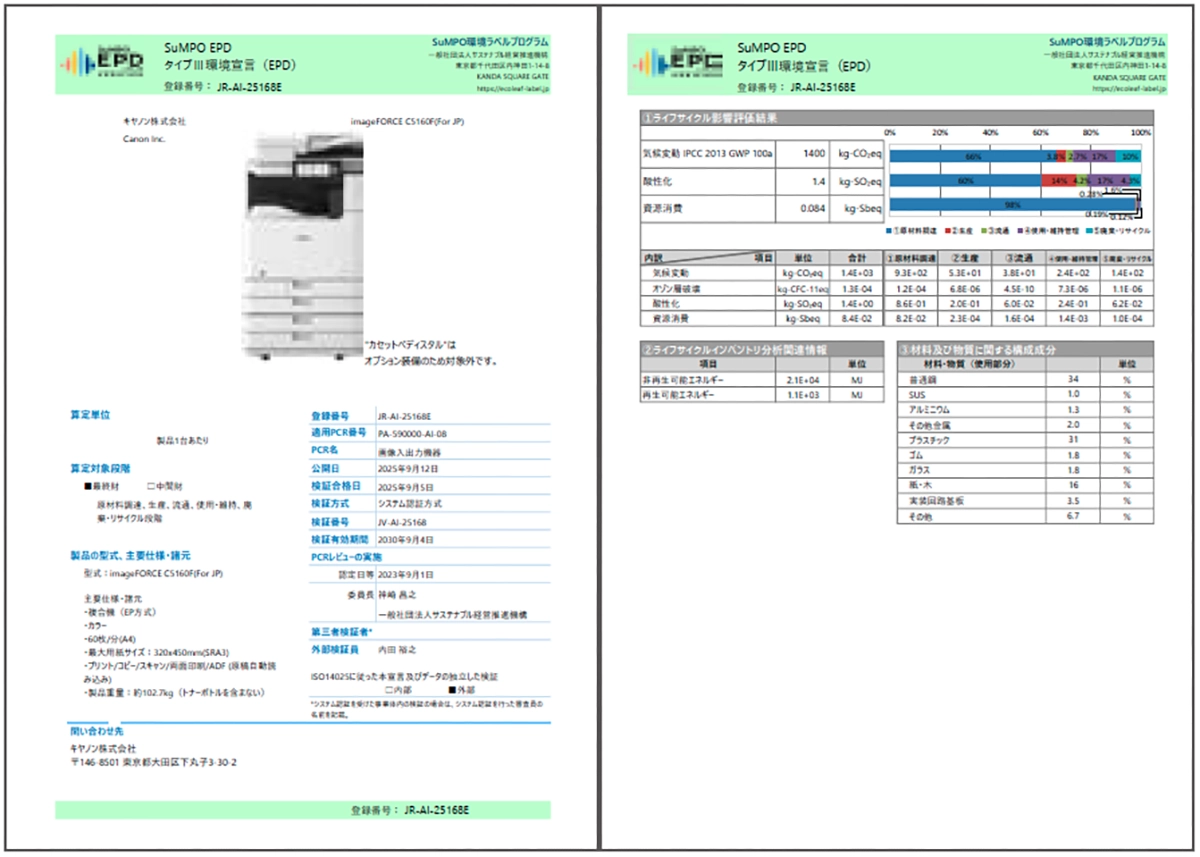
Collaboration to Incorporate Primary Supplier Data
Canon is working to reduce the environmental impact of products across their life cycle to help bring about a sustainable society.
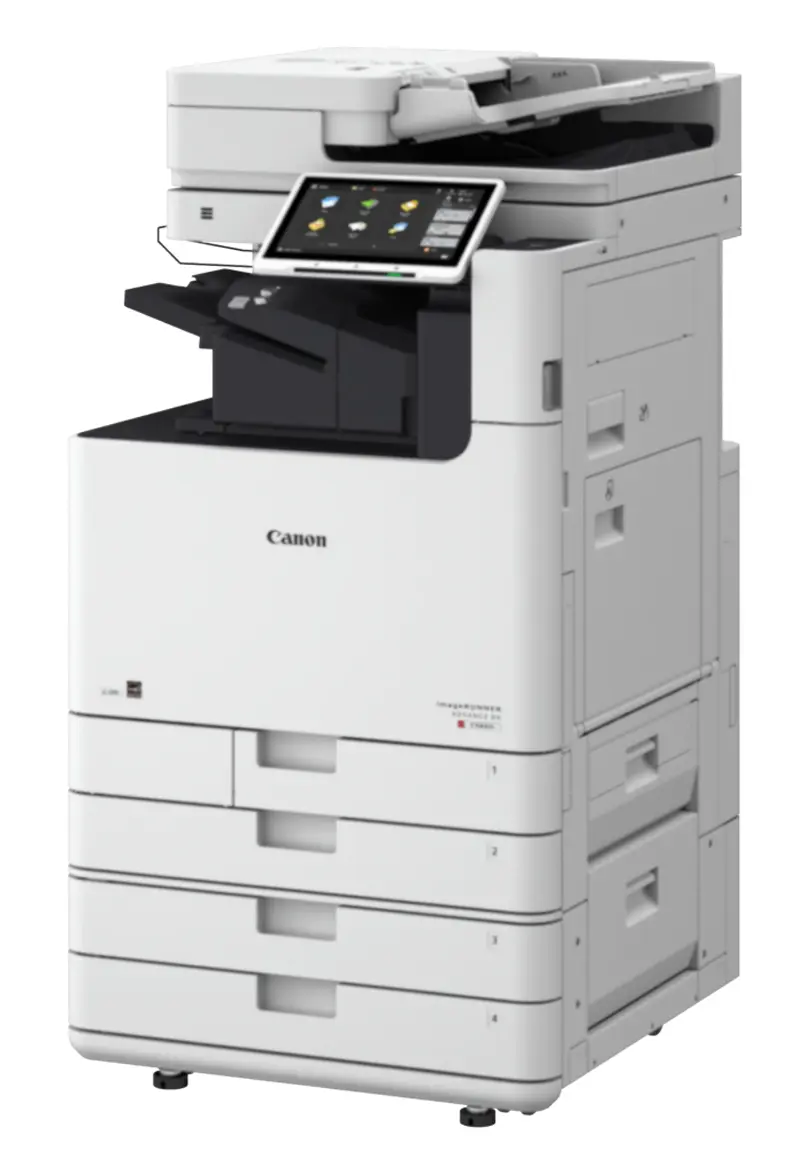
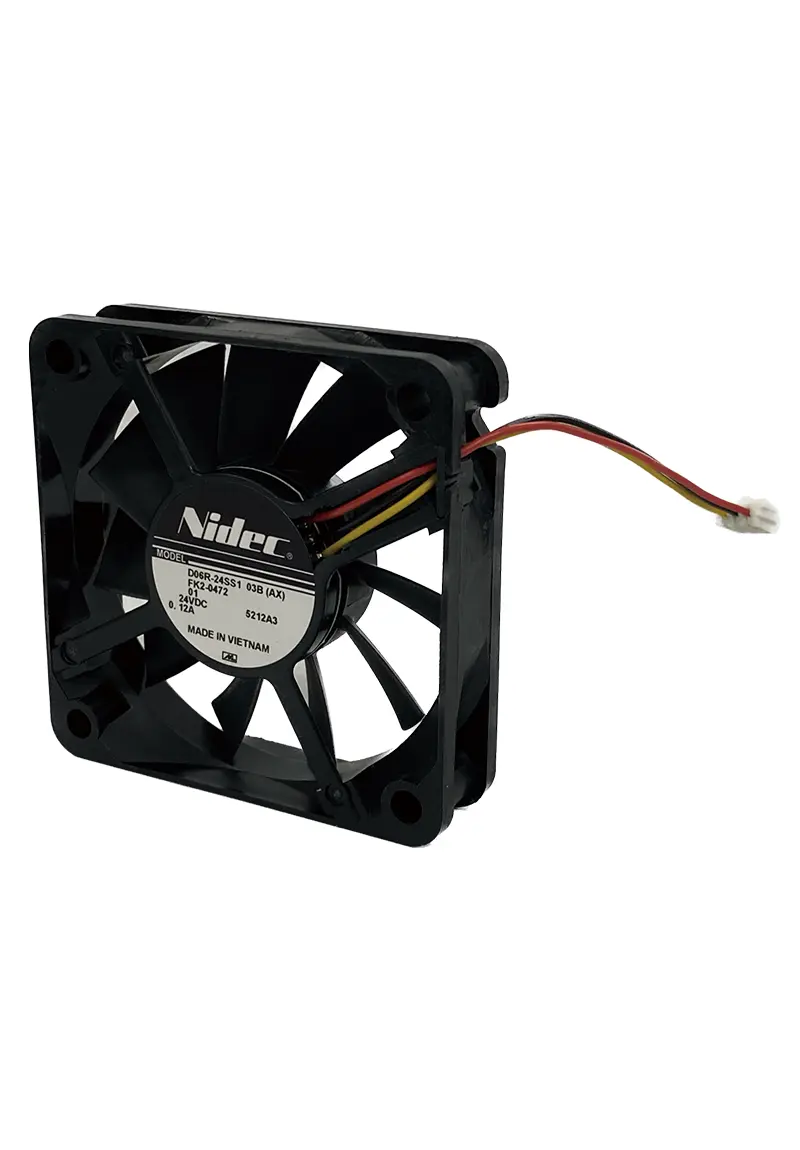
In cooperation with Nidec Corporation, Canon calculated primary data on raw material CO2 emissions for Nidec's fan motors and for the first time incorporated this data into the calculation of life cycle CO2 emissions for its imageRUNNER ADVANCE DX C5840i office multifunction printer. Canon also used the SuMPO environmental labeling program operated by SuMPO to register and publish the SuMPO EPD for this product.
Steps like this seek to improve the accuracy of EPD calculations and the reliability of environmental labeling through the use of primary data in collaboration with suppliers. Canon will continue working to reduce environmental impact across the supply chain to help bring about a sustainable society.
Reducing Impact in Product Use
Thanks to energy-saving technologies used in office equipment, Canon products achieved cumulative energy savings of 7,262GWh between 2013 and 2025. This is expected to result in 3,245,000 t-CO2e reduction.
Contribution to GHG emission reduction across society through products and services
Reducing Environmental Impact in Social Infrastructure Maintenance
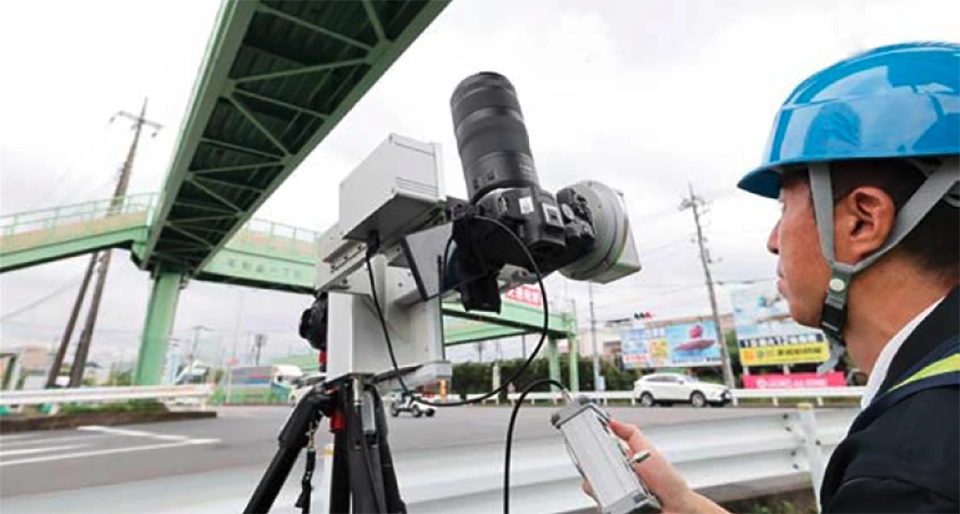
Canon combines advanced optical technology with AI analysis to offer new methods of maintaining and managing social infrastructure.
In a bridge inspection conducted in collaboration with Tokyo's Ota-ku and Tokyo University of Science, digital images and AI-based analysis were used to significantly reduce traffic restrictions and the burden of nighttime inspection work while maintaining the same level of accuracy as close-up visual inspections. We confirmed that this approach can minimize the impact on local residents and dramatically improve work efficiency. This AI-based analysis technology is being deployed under the name "Inspection EYE for Infrastructure," enabling the automatic detection of cracks and corrosion, with further functional enhancements also under consideration. In addition to contributing to longer lifespans and greater safety for infrastructure, these initiatives also reduce the environmental impact and social costs associated with inspection work.
Canon continues to capitalize on technological capabilities to work toward creating safe, secure cities and bringing about a sustainable society.
Furthermore, with the recent advancements in IoT and the anticipated explosive increase in data processing due to AI utilization, there are calls for greater energy efficiency in data centers that consume enormous amounts of electricity. The Canon IT Solutions Group is promoting environmental activities in data centers with the aim of reducing CO2 emissions and protecting the environment through the data center business. More specifically, it is making improvements to daily operations in collaboration with customers, such as optimizing air conditioning efficiency and cooling water temperature, as well as coming up with better equipment layouts.
The Nishi-Tokyo Data Center has gained "top-level" facility accreditation for its outstanding global warming countermeasure efforts, as well as "S" class status under Japan’s Act on Rationalizing Energy Use. Also, the Okinawa Data Center became the first in Okinawa Prefecture to run on essentially 100% renewable energy.
We have also donated CO2 reduction credits generated from our CO2 reduction activities.
Canon calculates avoided emissions for its ophthalmic imaging device based on an international standard
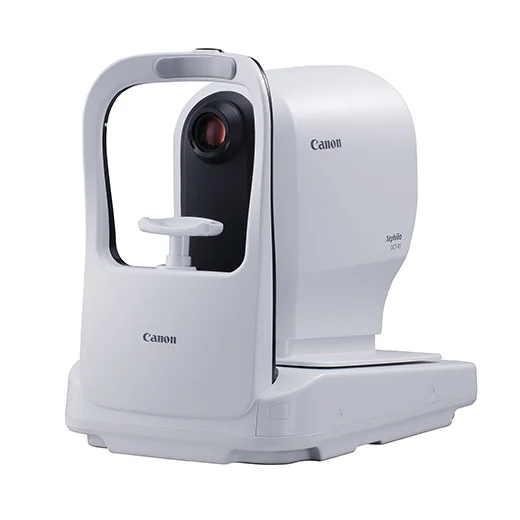
Canon has become the first company in Japan*1 to obtain third-party verification from the Sustainable Management Promotion Organization (SuMPO) for the calculation of avoided emissions for its OCT-R1*2 ophthalmic imaging device in accordance with the international standard IEC 63372*3. Avoided emissions are a quantitative measure of the contribution to reducing greenhouse gas (GHG) emissions across society achieved by replacing conventionally used products and services with alternatives that have a lower environmental impact.
The OCT-R1 is an ophthalmic imaging device that integrates OCT*4 and a retinal camera into a single unit. Based on this calculation and SuMPO's verification, using the OCT-R1 is expected to result in lower GHG emissions across society compared with the baseline scenario using separate OCT and retinal camera devices*5. In this calculation, transparency and reliability of the assessment are ensured by clearly defining the comparison conditions, assumptions, and calculation methodology and having the results verified by a third party.
Canon plans to calculate avoided emissions for other products and will contribute to a sustainable society by advancing climate action across society through its products and services.
| Third-Party Verification Report (Japanese report only)(441KB) |
- *1 As of June 10, 2026, based on Canon research.
- *2 The OCT-R1 enables automated imaging with OCT/OCTA and a retinal camera.
- *3 An international standard published by the International Electrotechnical Commission (IEC) in January 2026 that covers "avoided emissions," which quantify the contribution of products and services to reducing GHG emissions across society. https://webstore.iec.ch/en/publication/67618
- *4 An abbreviation for Optical Coherence Tomography, which captures cross-sectional images of the retina.
- *5 Based on comparison with Canon's OCT-A1 (an OCT system) and CR-2 AF (a retinal camera) as of May 2026.
Canon obtains third-party verification for IEC 63372-based avoided emissions calculation
https://global.canon/en/news/2026/20260610.html