



Resource Efficiency
Recycling
Initiatives Regarding Consumables
Toner Cartridge Recycling
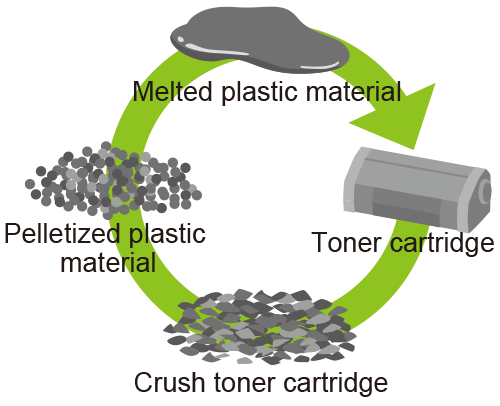
Canon has been operating a Toner Cartridge Recycling Program since 1990, the first such program in the industry. Returned used toner cartridges are brought to Canon recycling sites and sorted by model. Reusable parts undergo the necessary washing and maintenance and are then reused in new products. Meanwhile, parts and materials that cannot be reused are crushed and separated by material using physical characteristics such as electrostatic properties and specific gravity. The primary material of toner cartridges is high-impact polystyrene (HIPS), used for the housing. HIPS can be used repeatedly to make new toner cartridges through closed-loop recycling.
Furthermore, we have been promoting the use of recycled materials procured from outside sources in new Canon products, thereby expanding the scope of resource efficiency.
Through such efforts, we have collected toner cartridges in 24 countries and regions as of the end of 2025, with a cumulative collection volume of about 482,000 tons*1, recycling the cartridges at four sites*2 worldwide. As of 2025, we had also achieved a cumulative reduction in the use of virgin resources of approximately 349,000 tons*1.
- *1 Figures include OEM products. The use of closed-loop recycled materials and recycled materials procured from external sources is also included.
- *2 Japan: Canon Eco Technology Park, United States: Canon Virginia, France: Canon Bretagne, China: Canon Dalian Business Machines
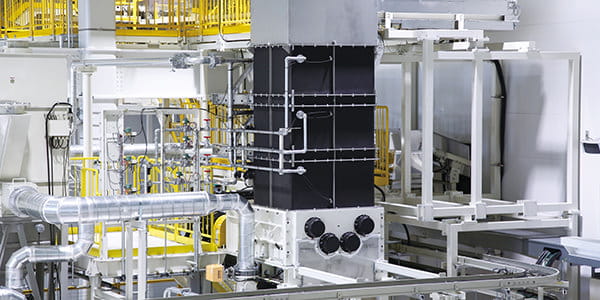
Canon Automated Recycling System for Toner Cartridges (CARS-T)
The Canon Automated Recycling System for Toner Cartridges (CARS-T) is a process whereby used toner cartridges are crushed and the materials automatically separated for recycling of the main component, high-impact polystyrene (HIPS). The sorting purity of the recycled plastic reaches 99% or greater* with the intensive use of various separation technologies at the different stages of the process.
A clean and silent operation, the CARS-T process also ensures there are no messy toner leaks from the sealed process units.
- * 99% or greater based on Canon's in-house sorting method
Collection and Recycling of Ink Cartridges
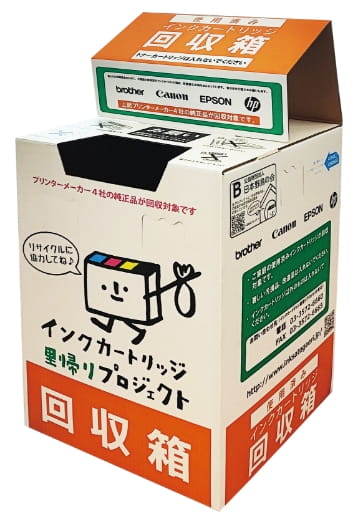
Canon has been collecting and recycling used ink cartridges since 1996. As of the end of 2025, the total volume of collected cartridges was 3,085 tons. In Japan, in conjunction with other printer manufacturers, Canon operates the Ink Cartridge Satogaeri (Homecoming) Project, a program that utilizes collection boxes for used ink cartridges in post offices, libraries, and other locations. Schools also collect cartridges through activities related to the Bellmark Campaign. Outside Japan, cartridge collection boxes are placed in large retail stores, companies, schools, and other locations. In Japan, collected cartridges are primarily closed-loop recycled as cartridge parts.
Canon Automated Recycling System for Ink Cartridges (CARS-I)
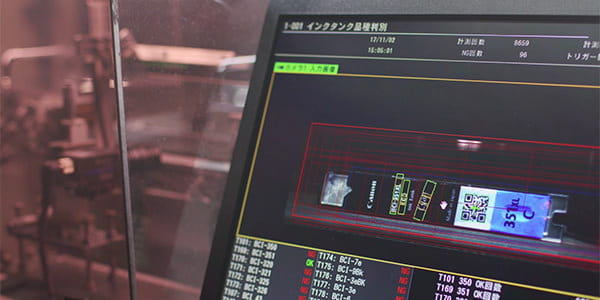
With the Canon Automated Recycling System for Ink Cartridges (CARS-I), a camera-based automatic sorting process is used on the used ink cartridges. The process line is automated, yielding an integrated process for the recycling of ink cartridges from disassembly and pulverization to washing. Separated materials are reused for ink cartridge components, materials for pallets used in logistics, or in stationery products.
Collection/Recycling of Used Toner Bottles
In Japan, since 1998 we have been collecting used toner bottles and reusing them simply as containers and for the purpose of recycling the plastic materials.
Since 2022, Canon Bretagne in France has built a system for replenishing recovered toner bottles and supplying them to the regional market. This has not only further reduced the volume of plastic used, but also realizes energy savings at the point of toner bottle fabrication.
State-of-the-Art Automated Recycling Plant at Canon Eco Technology Park
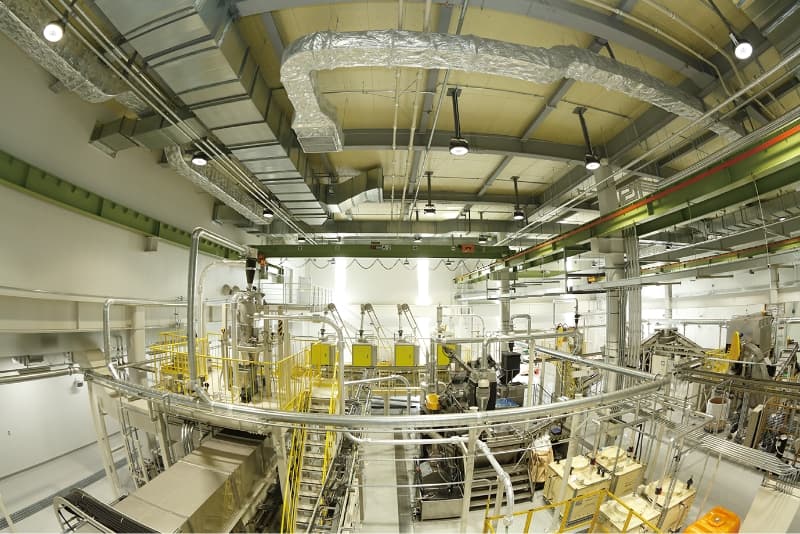
In February 2018, we opened the Canon Eco Technology Park. Based on a "clean and silent" design concept, which overturns the traditional image of recycling operations, the facility has implemented advanced systems to further boost recycling efficiency. The Canon Automated Recycling System for Printer Toner Cartridges (CARS-T) is a process in which, after separation using a camera-based process, used toner cartridges are crushed and materials automatically separated for recycling of the main component, high-impact polystyrene (HIPS). The sorting purity of the recycled plastic reaches 99% or greater* with the intensive use of various separation technologies at the different stages of the process. With the recycling system for ink cartridges (Canon Automated Recycling System for Ink Cartridges: CARS-I), a camera-based automatic sorting process is applied to used ink cartridges. The automated process line covers disassembly, pulverization and washing. Separated materials are reused for ink cartridge components and packaging. Resources that cannot be recycled in product-to-product recycling are diverted to material recycling or thermal recovery processes to help maximize resource efficiency.
Additionally, we have a showroom to highlight the remanufacturing of office products and Canon's environmental initiatives.
- * 99% or greater based on Canon's in-house sorting method
Development and Use of Recycled Plastic
Canon Eco Technology Park operates a closed-loop recycling system in which plastic parts extracted from collected machines are separated, washed and crushed to form pellets. The recycled plastic pellets are shipped to Canon production sites, creating a loop with a PCR rate* of 70-100%. The cumulative volume of pellets shipped as of the end of 2025 was 101 tons.
- * PCR rate = the proportion of post-consumer recycled (PCR) materials in recycled materials
Plastic Sorting Systems and Analytical Instruments that Revolutionize Recycling Through Proprietary Technologies
In recent years, promoting and expanding plastic recycling has become an important theme in realizing a circular society.
Canon has developed plastic sorting systems utilizing tracking Raman spectroscopy technology, enabling the sorting of black plastics, which have traditionally been difficult to separate. In addition, Canon has newly commercialized the Raman Plastic Analyzer, applying this Machinestechnology to contribute to more advanced material analysis and quality control in the recycling process.
Through improving productivity with recycling technologies and maximizing plastic recycling, Canon will continue to contribute to the realization of a circular society.
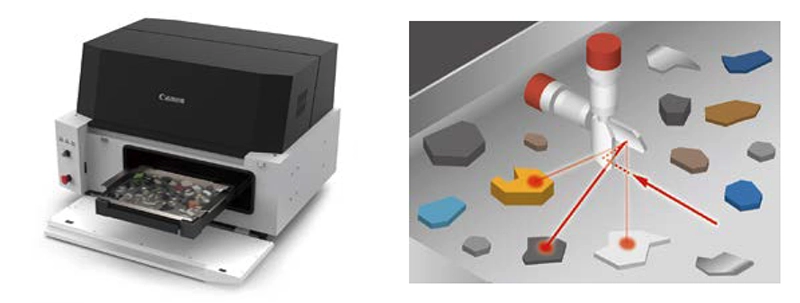
(Right) Canon's high‑precision galvanometer scanner sequentially irradiates multiple plastic pieces arranged on a tray with a laser, and the material is identified by spectroscopically analyzing the material‑specific Raman scattered light generated in the process.
3D Printer Filaments Made with Plastic Recycled from Multifunction Devices
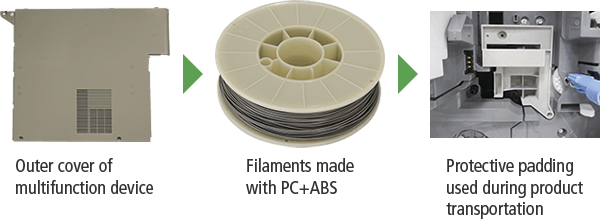
As a new initiative to drive plastic material recycling, Canon Ecology Industry Inc. has developed a filament for 3D printers made with 100% recycled plastic. The recycled plastic raw materials used are PC+ABS and HIPS, which have a record of reliable performance as plastic materials and have been widely used in the outer covers and cassettes of multifunction devices and other applications. Adapting technologies accumulated through recycling of other Canon products, and utilizing optimal technologies to crush and wash the outer covers and cassettes of multifunction devices recovered from the market and then process them through extrusion-molding, enabled filaments with a stable wire diameter to be manufactured even with 100% recycled plastic.