




Resource Efficiency
Remanufacturing of Multifunction Devices
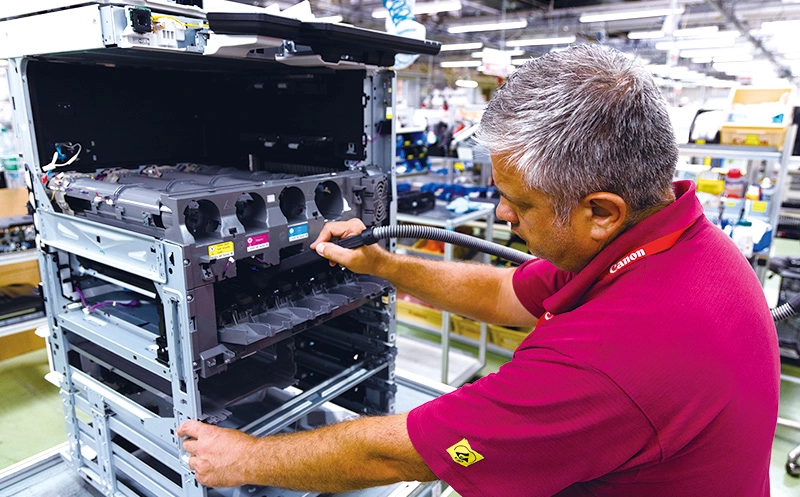
Since 1992, Canon has undertaken remanufacturing of used multifunction printers. This process involves a system that automatically determines which parts should be reused, based on operating data about the equipment, such as the number of years in use, its history of breakdowns, and the number of pages printed. Then, following strict reuse standards, we replace any parts that show wear or deterioration. The production line and inspection processes used are on a par with those for devices made only with new parts. When a remanufactured device is shipped, it is guaranteed to offer the same level of quality as a new product. We market remanufactured devices from the imageRUNNER ADVANCE series under the Refreshed series brand in Japan and under the ES series brand in Europe.
Remanufacturing Flowchart (Canon Ecology industry, in japan)
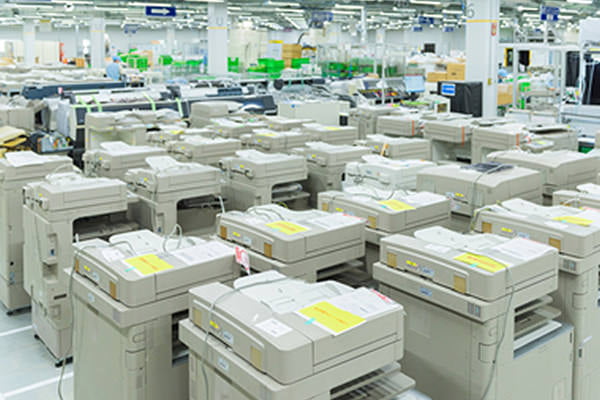
1. Collection
The used products that have been collected are gathered up and go through an initial check
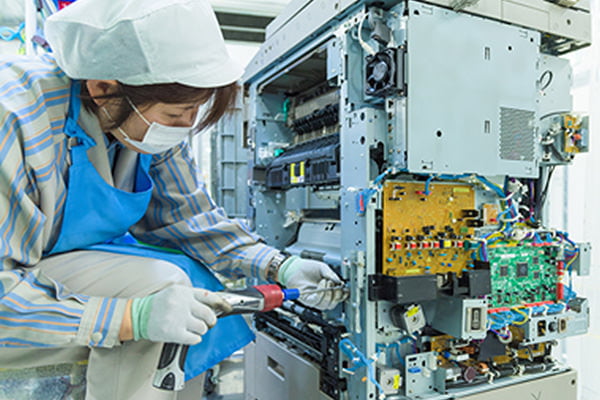
2. Disassembly
The exterior covers and parts are removed
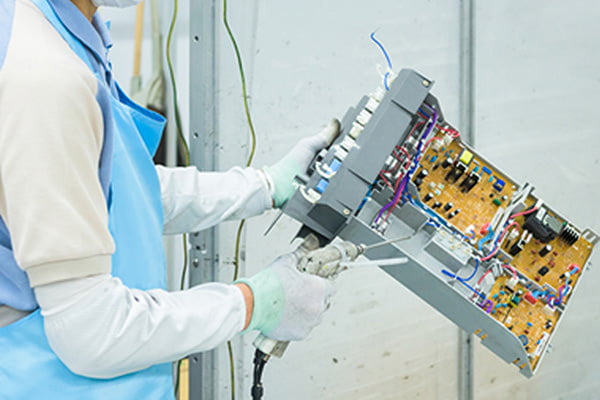
3. Cleaning
The body's frame and the parts that were disassembled are cleaned
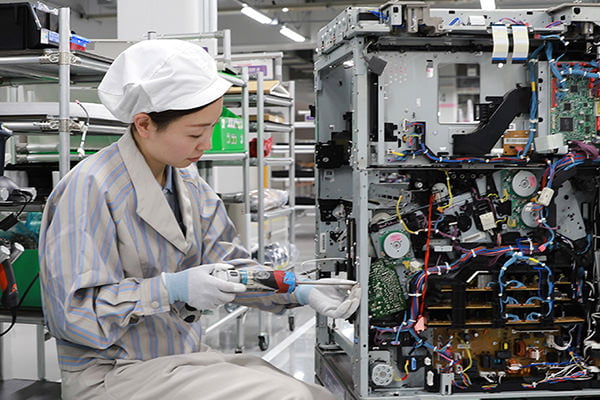
4. Assembly process
The cleaned frames are assembled with new and reused parts, and then the exterior covers are attached.
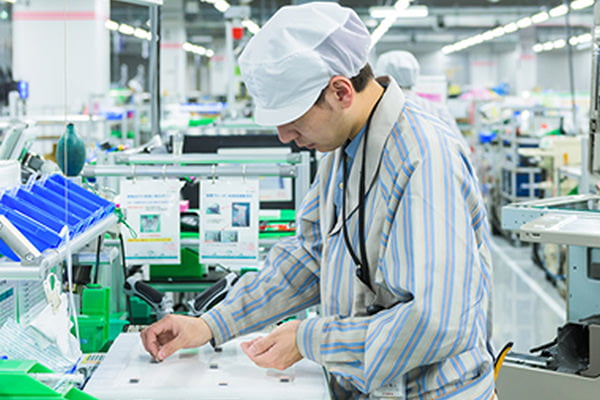
5. Inspection
The same inspection as for new products are done to make sure that all the functions work appropriately.
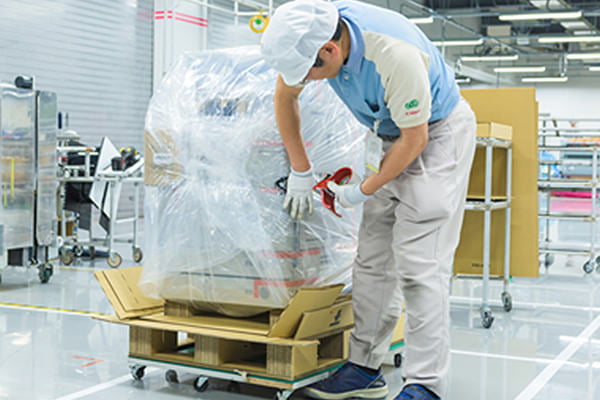
6. Shipping and sales
The products are packaged just like a new product, and the sent to market.
Examples of Initiatives in Europe (Canon Giessen)
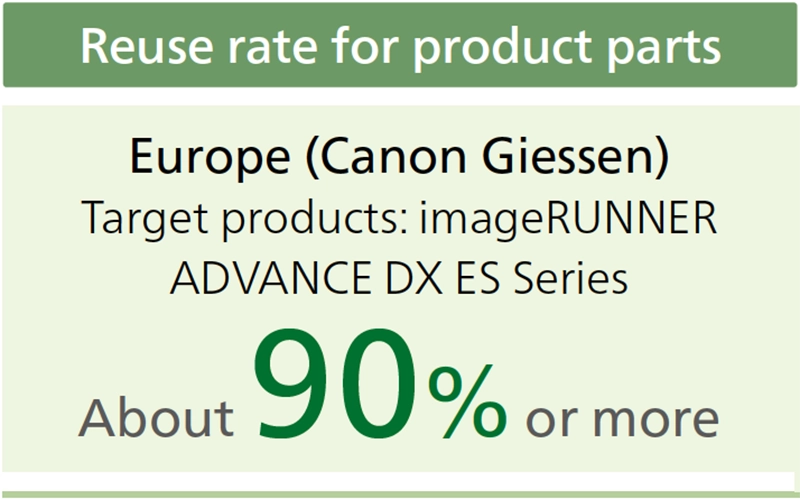
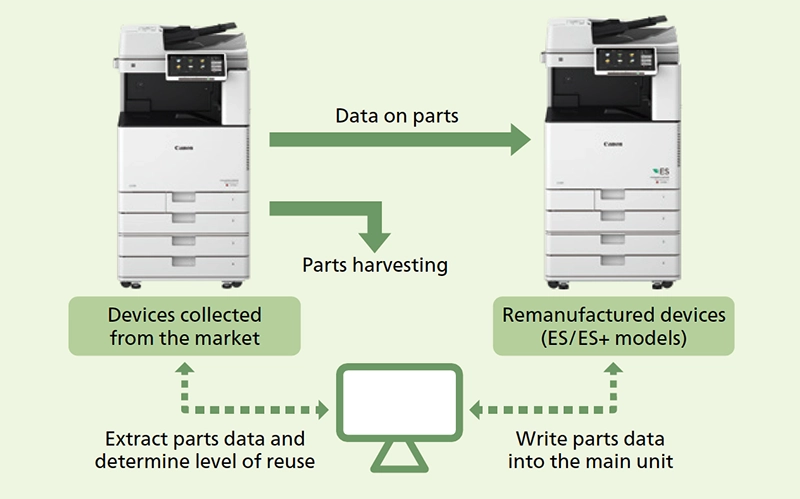
At Canon Giessen, a recycling site in Germany, data on parts is collected for each unit to determine reusability. We also run a system that records data from collected parts and reflects them into remanufactured devices to improve efficiency of production of remanufactured products.
Comment from a European Marketing Representative for the ES Series
Customers increasingly seek solutions that comply with corporate sustainability policies and reduce hardware costs without compromising quality. They also require essential features for security and GDPR* compliance.
The ES series addresses these needs by providing competitive pricing compared to new models, significantly lowering carbon footprint through reduced CO2 emissions in manufacturing and transport, and minimizing raw material use, thanks to remanufacturing in the CE region. These devices maintain high reliability and performance equivalent to new units, while incorporating robust data and network protection features.
Customer feedback has been very positive: organizations such as La Paz Hospital and Ilunion Hotels highlight ES devices as key to achieving sustainability goals without sacrificing quality or usability. Long-term users like Ibersalut, a public healthcare service organization, confirm consistent performance and cost savings, reinforcing ES as a trusted, environmentally responsible choice.
- * GDPR : GDPR is an EU regulation that protects personal data.

Sales and Marketing Department
Canon Spain
Examples of Initiatives in Japan (Canon Ecology Industry)
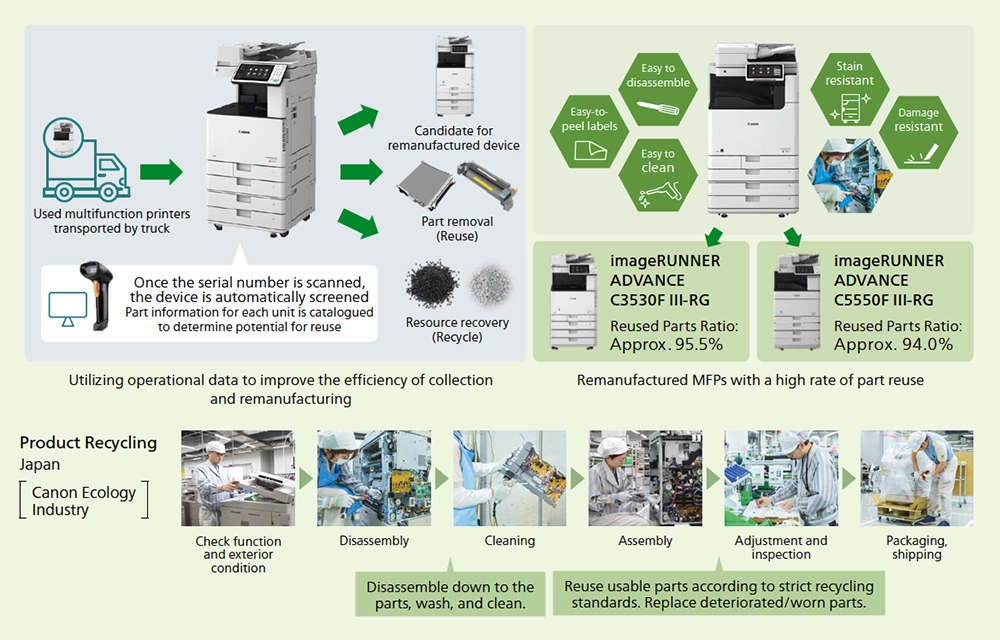
In the Refreshed series, we have achieved a reused parts ratio of over 90% in all color multifunction printers. Especially in the imageRUNNER ADVANCE C3530F III-RG, we achieved an industry-leading reused parts ratio of about 95.5% by removing the smallest imperfections with the use of sandblast polishing.* To further promote the recycling of resources, we use approximately 83% recycled plastic in all of the plastic used in the packaging materials. In addition, Canon is creating product platforms to standardize parts and designing products that are easy to reuse and recycle through disassembly and cleaning.
- * A technique for polishing resin surfaces by blasting with microparticles
Reuse of Parts
Canon collects parts from used products for maintenance purposes. Parts extracted from used products and collected parts undergo disassembly, washing, cleaning, and reassembly before being reintroduced to the market as components of remanufactured products or as maintenance parts.
Canon Giessen in Germany, Canon Virginia in the U.S., and Canon Eco Technology Park in Japan are engaged in the reuse of parts. The latter in particular is meeting maintenance demand after ceasing the production of MFP main units by operating production lines for new and reused parts in parallel. By reusing some of the collected parts in the production of new parts, we can reduce the use of virgin resources.