




Resource Efficiency
Canon's Approach to Achieve a Circular Economy
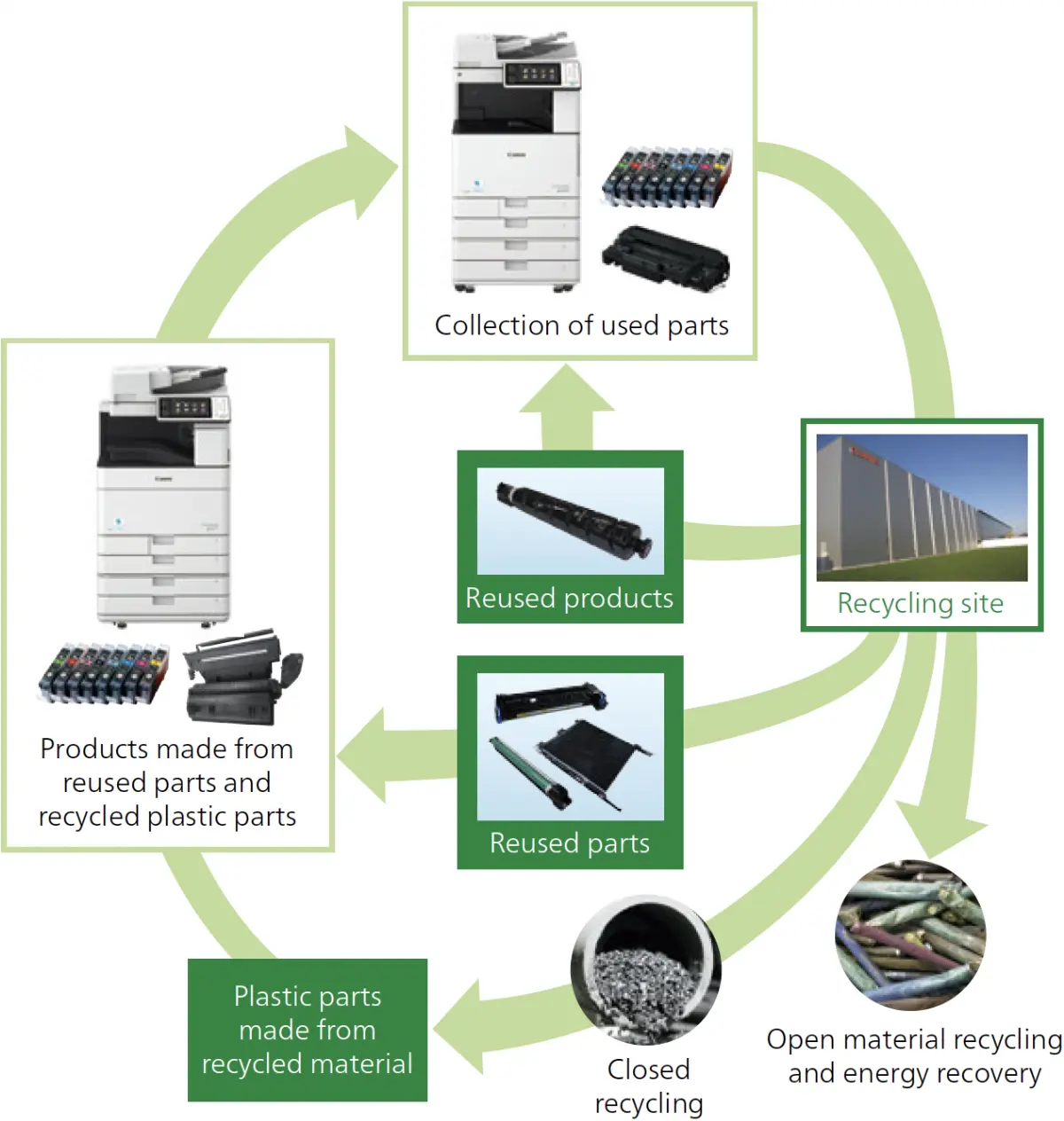
Flowchart of Resource Efficiency
Canon seeks to recycle used products to allow the continued reuse of resources and maximize the value brought about by resource efficiency. In addition to contributing to resource efficiency, we believe these efforts will help bring about a carbon-free future.
Product-to-Product Recycling Volume
Since 2008, Canon's recycling sites have reused 39,983 tons of products and parts directly and extracted 49,241 tons of plastic from used products for use as raw materials in new products.
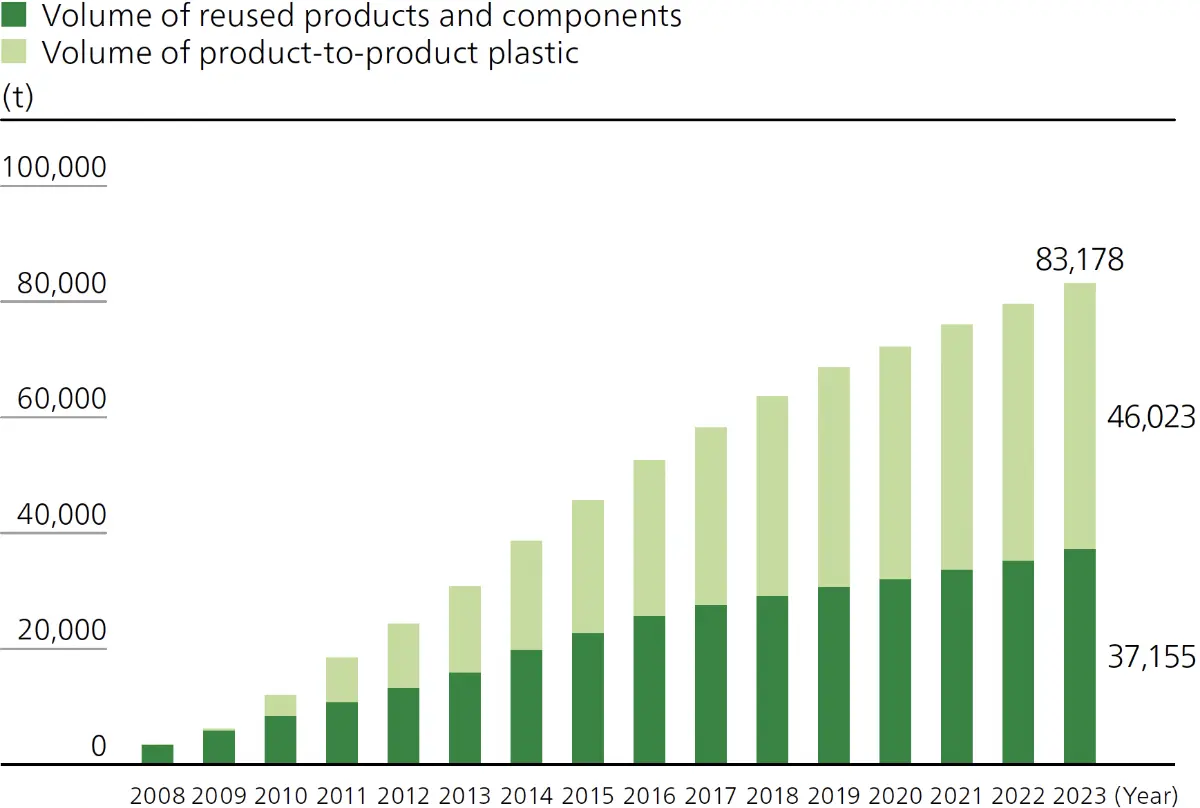
- * Product recycling initiatives have been ongoing since before 2007. Data are based on 2008 as the baseline year.
Resource Efficiency Initiatives and Targets by Industry-Oriented Business Group
Canon handles a broad array of products, ranging from consumer products to industrial products and from small to large products. We believe it is vital to pursue resource efficiency initiatives appropriate for each product group, taking into account product characteristics and market conditions. Canon’s four industry-oriented business groups—Printing, Medical, Imaging, and Industrial —have established resource efficiency initiatives and targets tailored to their particular context.
The Environmental Approaches and Initiatives of Four Business Groups
Improving the Resource Recycling Rate for the Printing Business
The resource recycling rate is an indicator that represents the proportion of recycled materials and recycled products in the total sales weight of the Printing Business, and a target of 50% has been set for 2030. To improve the resource recycling rate, Canon is implementing the initiatives shown in the table to the right.
In 2025, as a result of activities to enhance reuse and recycling, the resource recycling rate reached approximately 16.7%, representing an improvement from approximately 16.0% in 2024*.
Looking ahead, toward the target of 50% by 2030, we will further promote resource efficiency initiatives through measures such as expanding the use of recycled materials and increasing the production, sales, and collection of recycled products.
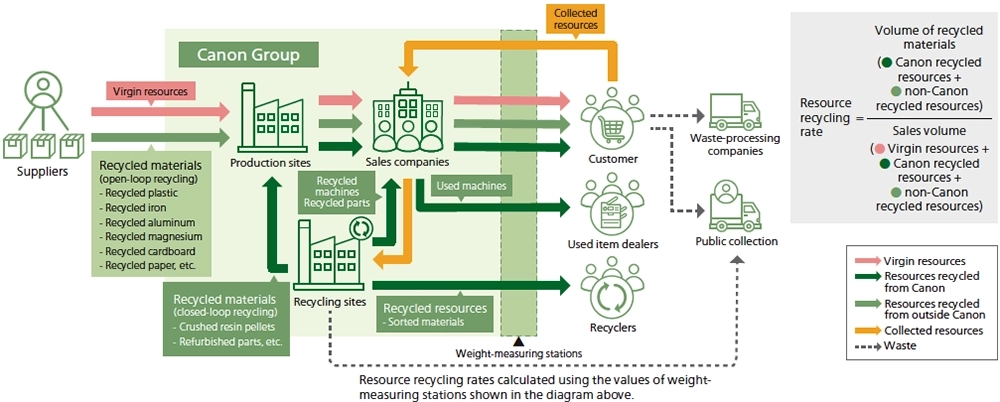
Initiatives to Improve the Resource Recycling Rate
| Initiatives for new machines |
|
|---|---|
| Initiatives at recycling sites |
- * In 2025, the calculation methodology was revised to more accurately reflect actual conditions, and the 2024 results were also recalculated.
Reducing Environmental Impact in the Medical Business and Improving Total Waste Generation
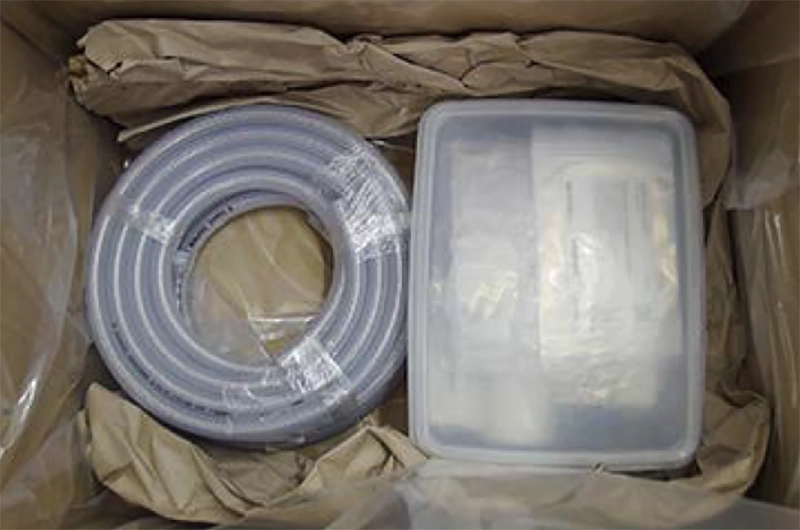
At the Nasu Plant of the Medical Business, steps to reduce environmental impact include more rigorously separating discarded products as well as reusing parts and selling valuables. Guided by an annual target of improving the total waste generation per basic unit by 1% or more, the plant brought pallets used in deliveries back for reuse in 2025, achieving a 4.2% improvement over 2024, above the target.
Reducing Single-Use Plastics in the Imaging Business
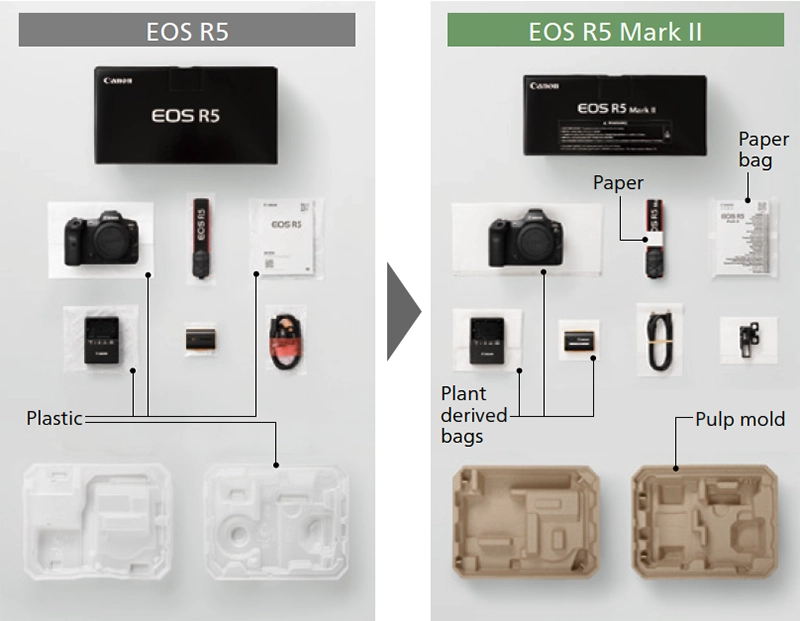
In the Imaging Business, we aim to boost the proportion of products that do not use single-use plastics* in their packaging to 100% by 2030 for all of the interchangeable-lens digital cameras, interchangeable lenses, and compact digital cameras announced in a given year.
Starting with the PowerShot V10 released in 2023, we had eliminated the use of single-use plastic packaging in 33 models as of the end of 2025, including the EOS R50 V, RF75-300mm F4-5.6, and related accessories.
- * This refers to petroleum-derived plastics, and excludes the raw materials used for labels, coatings, and adhesives
Extending Product Lifespans in the Industrial Business
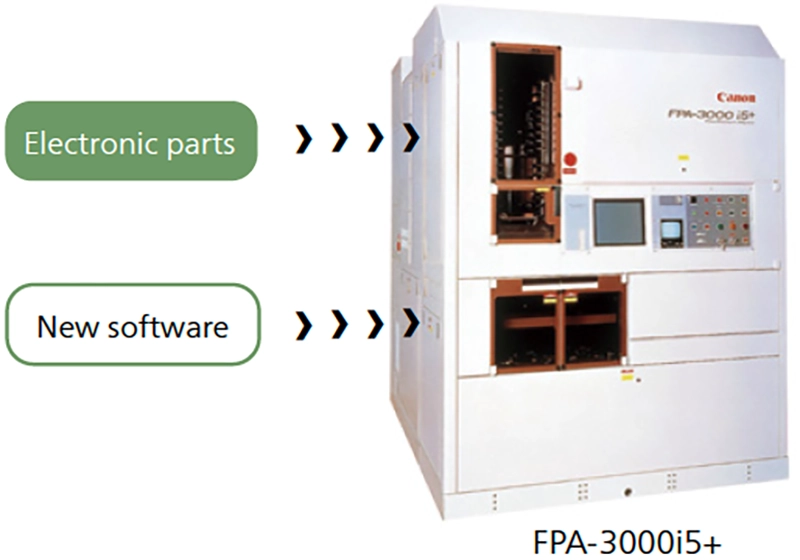
We are working to extend the lifespans of products in the Industrial Business, with a goal of ensuring that 95% or more of the i-line and KrF lithography equipment shipped in 2001 or later is still operational in 2030. Initiatives include providing parts and software that extend product lifespans and product lifecycles and reduce waste, as well as developing products that encourage recycling.
In 2025, we launched services to overhaul the electronic components of legacy products of the FPA- 3000 series i-line lithography systems and switch out existing servers with the latest models, using virtualization technology to avoid the need to rewrite existing software. This will enable us to further extend the lifespan of products that have been up and running for many years at our customers’ production sites. We will further increase the proportion of i-line and KrF lithography equipment shipped in 2001 or later that is still in operation—currently at 92.6%—by 2030.
GHG Reduction Effects Through Resource Efficiency
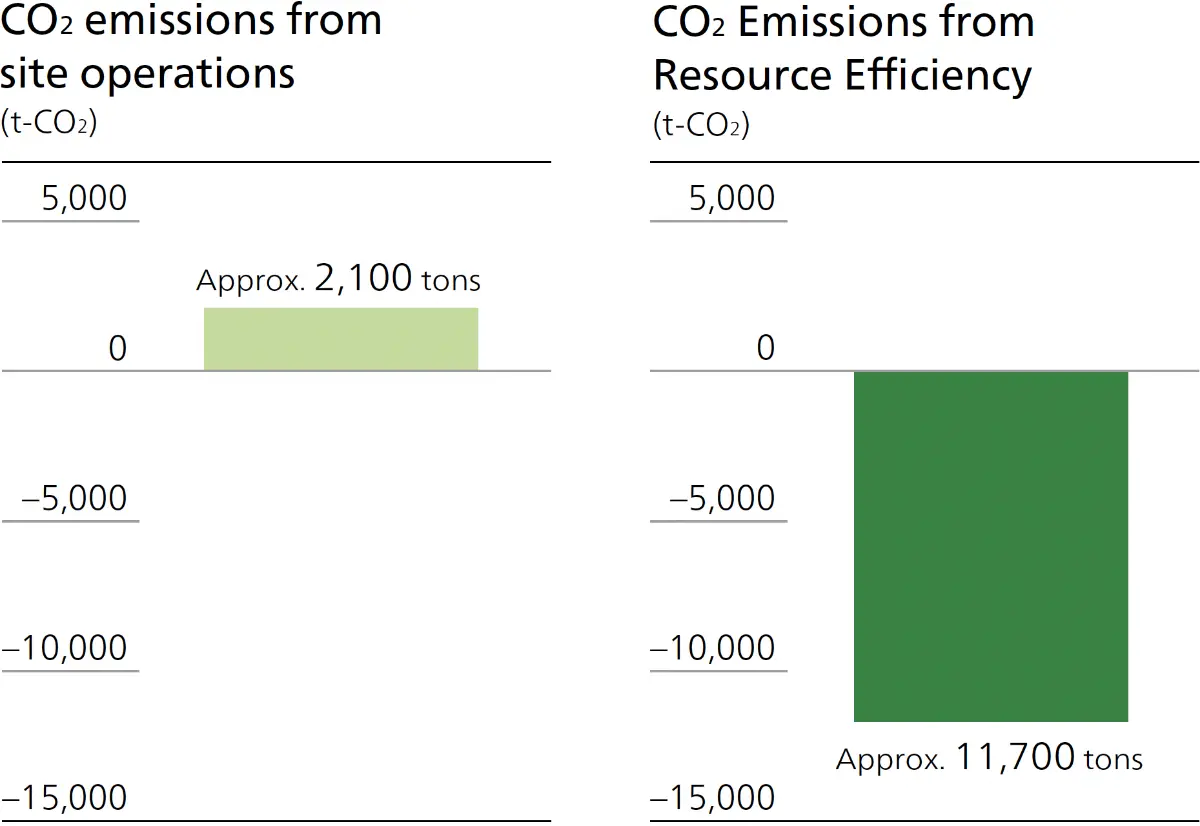
We see initiatives at Canon’s recycling sites as not only contributing to resource efficiency but also contributing to a carbon-free future. The reuse of parts through remanufacturing and the recycling of plastics through closed-loop recycling allow us to reduce the amount of CO2 emissions generated compared with procuring new raw materials. Canon Eco Technology Park (operated by Canon Ecology Industry Inc.) emitted approximately 2,900 tons of Scope 1 and 2 GHG through site operations. These efforts have resulted in a reduction of approximately 13,200 tons of GHG emissions.
Environmentally Conscious Design
To make effective use of our limited resources, it is imperative that resource efficiency is at front of mind in product design. Starting from the design and development stage, Canon gives careful consideration to the whole process through to collection and recycling of end-of-life products. Our Environmentally Conscious Design Guidance summarizes the various considerations that contribute to resource efficiency, such as miniaturization, weight reduction, adoption of environmentally friendly materials, extending product lifespan, improving maintainability, and facilitating disassembly and separation for reuse and recycling. All of these items are incorporated into the design process.
Incorporating Recycled Materials (Recycled Plastic and Iron)
Starting with new products released in 2025, Canon has been pursuing the use of recycled steel for some of the steel materials used in its multifunction printers and printer parts.
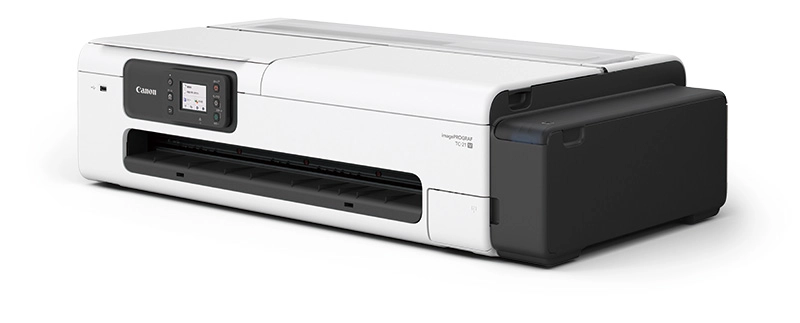
In the new imagePROGRAF TC-21/TC-21M large-format inkjet printers, released in April 2025, we achieved the use of around 5% of recycled iron by mass for the iron used in the main unit.
Furthermore, we adopted about 40% recycled plastic by mass for the plastic material used in the main unit.
We also used recycled iron in the new imageFORCE 8100 series of A3 monochrome multifunction printers, released in September 2025, and in the new imageFORCE C431 series of A4 color multifunction printers, released in October.
As recycled plastic is made from waste plastic and recycled iron is made from iron scrap, the introduction of these recycled materials reduces the amount of virgin resources used and helps increase the resources recycling rate.
With regard to recycled steel in particular, Canon dismantles its own end-of-life multifunction printers and printers and reintegrates the resulting steel scrap into its products through collaboration with steel recycling manufacturers. Through these efforts, Canon promotes the circulation and effective use of limited resources.