




Adastra
A Geometric Design that Fuses Function and Beauty
Semiconductors and electronic components are used in everything from the electronic devices people use every day to social infrastructure. They are essential parts of lifestyles and society. Semiconductor chips are manufactured using devices that are specialized for individual processes. One of those devices is the sputtering system, which deposits thin films on a wafer for use in creating electrical circuits.
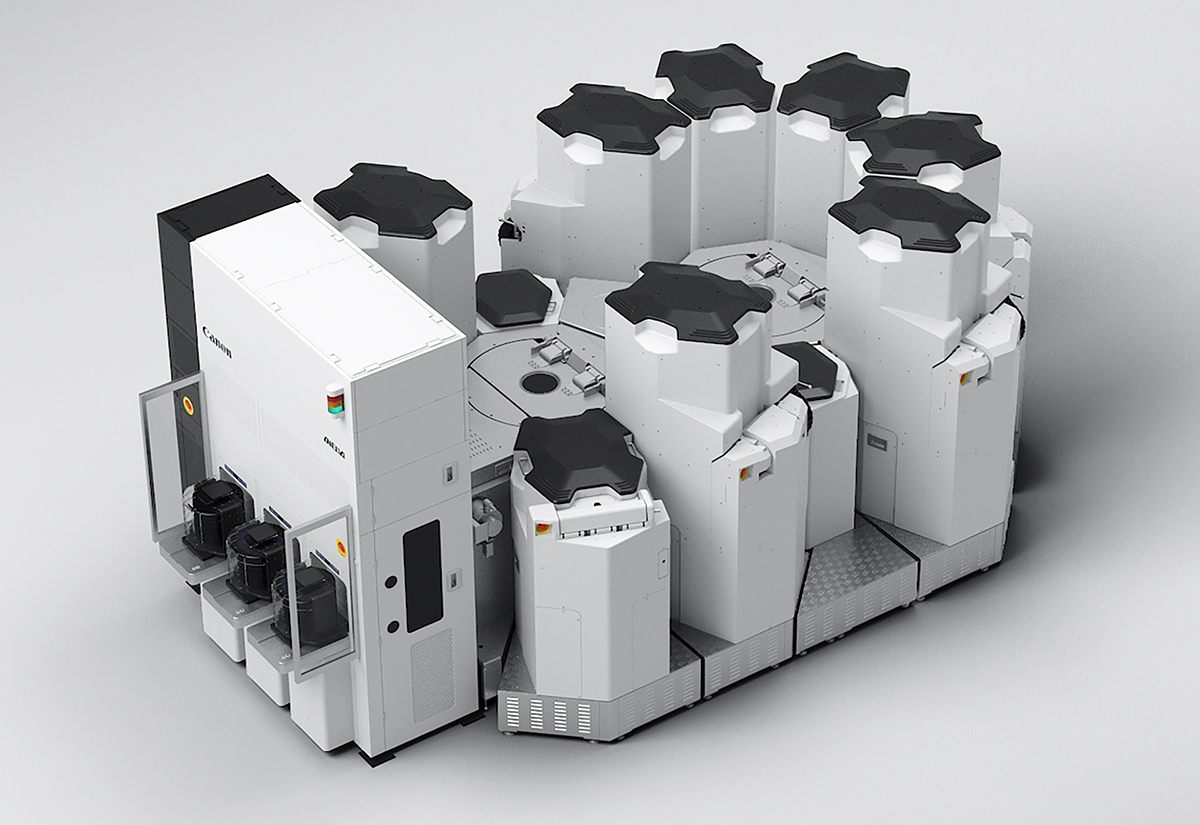
This family of devices, with their distinctive monochromatic, high-contrast designs and their beautiful geometric forms, is the Adastra series, a sputtering system platform that handles film deposition for a wide range of applications. It is capable of nano-level thin film deposition, and it has a smaller footprint and consumes less energy than conventional sputtering systems.
The development division of Group company Canon ANELVA and Canon Design Center worked together on its development from the start, creating new design value in a previously untapped segment. It has received high praise for its exceptional technologies and design. In Japan, it received the GOOD DESIGN GOLD AWARD in 2024 and the Grand Prix (Award By The Ministry Of Economy, Trade And Industry) in the 55th Machine Design Award IDEA. In Germany, it won the Gold Award in the iF Design Award 2025.
An Assertive Style that Fuses Functionality and Aesthetics
The designers began their product design by closely observing and learning about the conventional devices that the Adastra is based on. The impression made by these devices, with their complex metal pipework and exposed cables, was sharp. Oppressive. The first task the designers faced was changing that visual impression.
What kind of visual design would embody the functionality and technological sophistication of these systems, feeling both sensible and user-friendly?
The new system should break away from the design dictates of past devices, surprising and exciting those who see it. What kind of "face" could accomplish that?
It would be no overstatement to say that with the Adastra, the designers were taking on the challenge of working in a segment where aesthetic design had made little inroads.
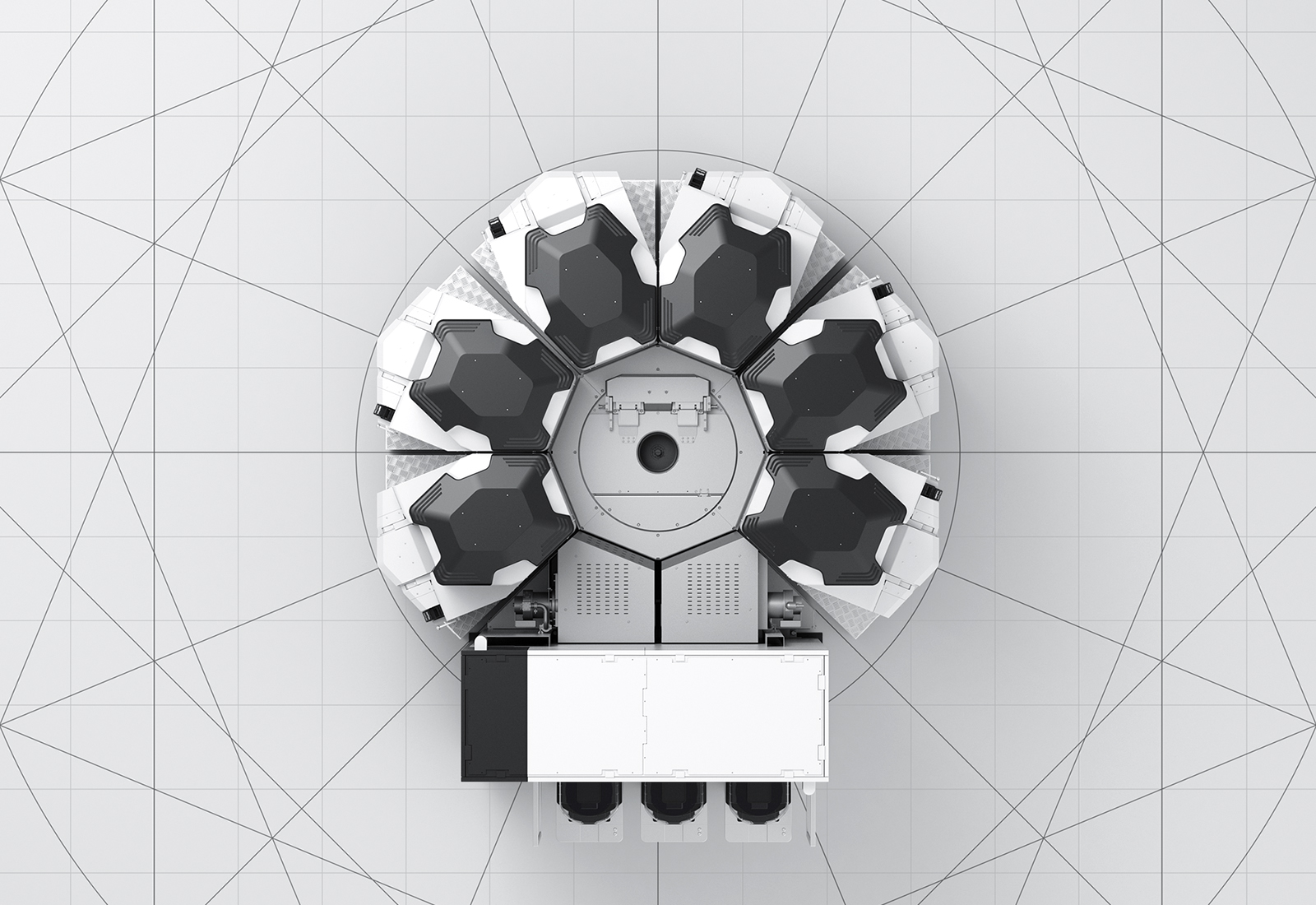
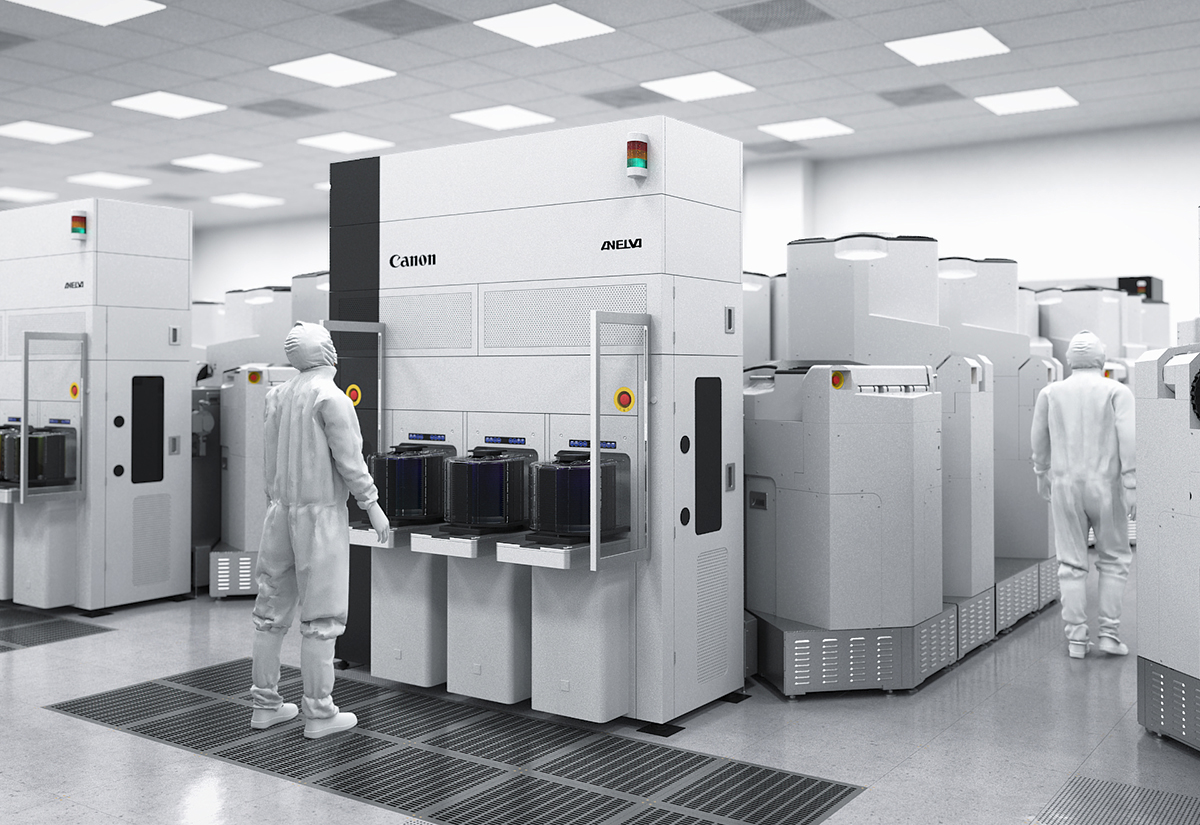
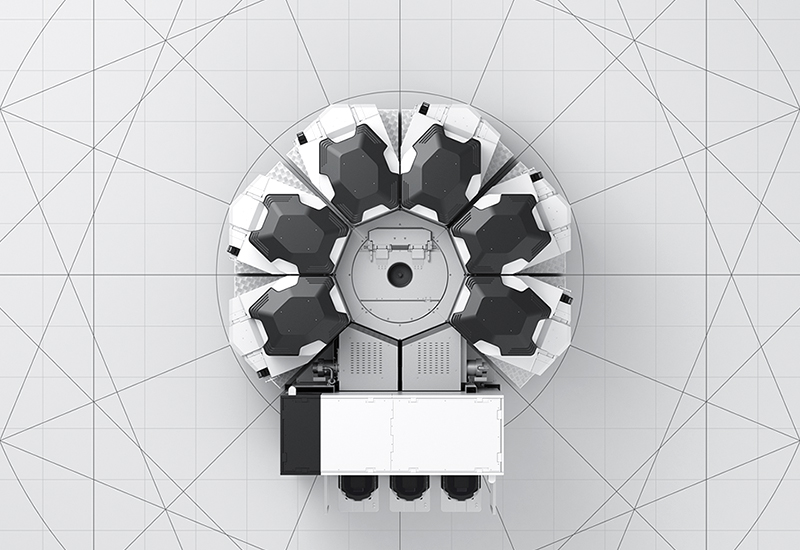
Adastra systems are laid out with a central core, around which processing modules are connected in a flexible configuration. This is so that the systems can be efficiently arranged in the limited space available in cleanrooms. Based on this fundamental structure, the designers boldly covered the system's complex structural components, which had been responsible for that strong sense of psychological oppression made by previous systems.The designers produced a geometrical design in which the core, composed of an octagonal shape, is surrounded by regularly arranged pentagonal processing modules. The coloring, with its contrast of black and white, also makes a strong impression. This new design is distinctive, but also clean and precise, sweeping away the mental image that had been shaped by past industrial machinery.
What's more, the design is not purely based on aesthetics, but instead was developed through successive iterations and experiments anchored by the system's core functional and structural requirements. Every shape, down to the finest details, was an intentional decision, springing from the work that operators perform and how operators would feel using the system.
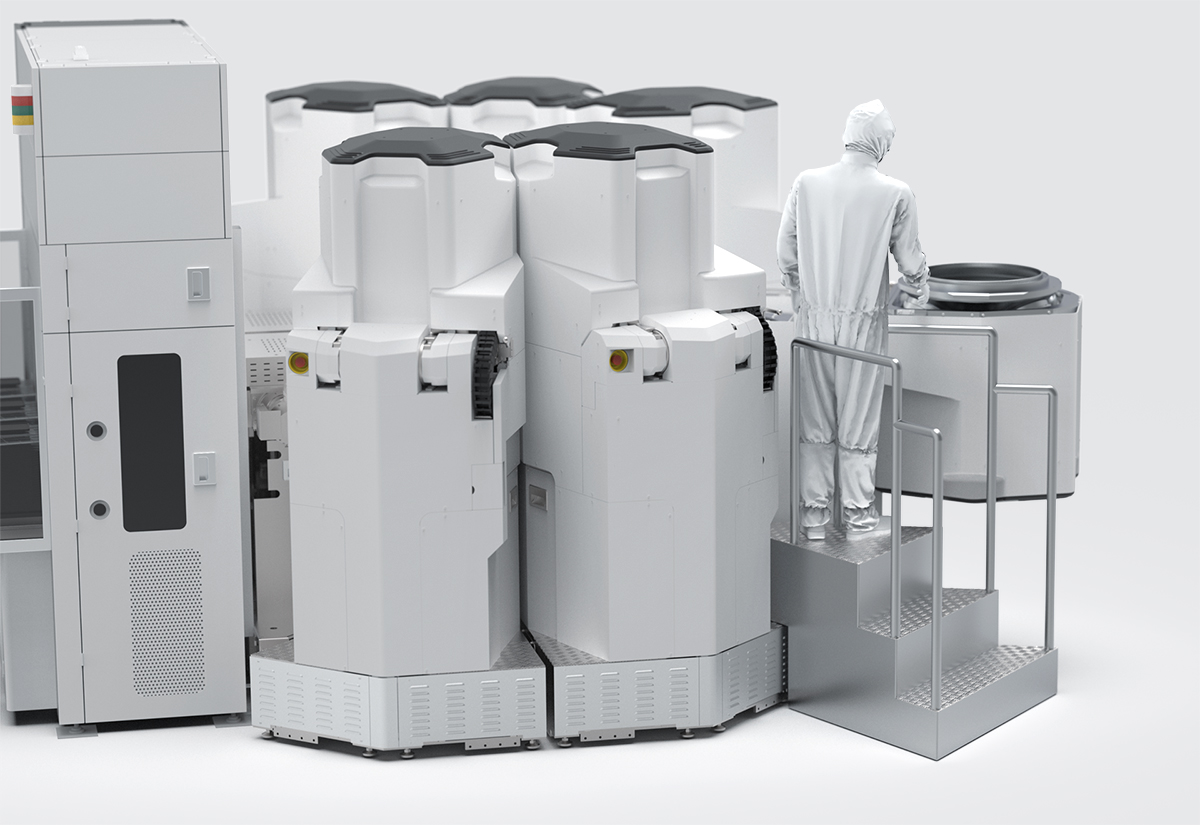
Consider ease of maintenance. Each module has a pentagonal shape, which means when two modules are placed side by side, they create a triangular area between them where personnel can perform maintenance work. This is one of the key points of the design. These systems require spaces for performing maintenance, but one of the fundamental objectives of this design was to make the systems more compact. To deal with these two mutually contradictory goals, the designers came up with a functional design that took into consideration the layout of the system's internal mechanisms, space efficiency, and the rotational path of the tops of the modules, which are open when work is being performed, to produce triangular works areas that are as spacious as possible.
Another design element is visibility. The modules' black caps are visual symbols that convey the fact that they are opened when maintenance is performed. At the same time, they are also positioned as representations of the system's modularity and expandability. Combining black and white creates a sense of visual uniformity with Canon’s diverse semiconductor production equipment and gives the series’ products a striking appearance.
Ergonomics Aligned with the Work Performed in Special Environments
Adastra systems are used in semiconductor production clean rooms, which are kept exceptionally contaminant-free. They are used by operators wearing special clean suits. In our usability design, we believe that it is vital to understand who is using products, in what kinds of environments, in what ways. That's why the designers put on clean suits and went into actual cleanrooms to experience system operability themselves. They also observed operators as they worked and they conducted interviews, gaining a deeper understanding of what the situation is like in the actual field.
What became evident was the physical burden placed on operators. They saw operators having to replace heavy 10 kg components while wearing clean suits which restricted their mobility. They also saw that the places where the work was being performed were even higher up than they'd thought. They realized that they faced the twin tasks of ensuring both ease of operation and safety.
With the Adastra, they decided to use coverings to simplify the appearance of the systems, which also tied into their visual design, and to make it clear where work is performed, making work more intuitive and efficient. They also added projections and indentations to the tops of modules, which operators could grip for better stability as they performed their work. They rounded off corners of the areas that operators came in contact with while working, making the systems safer for users.
The work spaces were high up, at heights of 1.5 m or higher, and the equipment was operated by people of various heights, so the designers proposed different device layouts and the installation of specially designed step platforms. They used 3D simulators and other techniques to evaluate different design concepts and decided on step platforms with the heights, shapes, and areas that operators would need.
The designers made refinements to these shape details and developed specialized components to solve the problems they had identified through their own experience.
Fundamental Design that Elevates the Value Created by Work
The design initiatives carried out during the development of theAdastra series attempted to emphasize the new value of "design" for the semiconductor manufacturing industry, which has always prioritized functionality and efficiency.
People's motivation doesn't just come from the actual benefits they receive, it is also lifted by emotional aspects, like their dreams and their pride. That's why our designers didn't focus on functional value (actual benefit) alone. Instead, they worked together with the development division to create a design that also elevated the emotional value of the systems, stimulating users' ambition and pride and giving them a true sense that they were operating one of the finest precision devices in the world.
Everyone presented their own ideas and collaborated as a team, handling design changes and carrying out multiple rounds of verification. The resulting system, the Adastra, is one with a unique and striking appearance, a fresh new face for precision devices. At the same time, the designers diligently pursued ease of use based on their understanding they had gained through their cleanroom experience.
We hope that the Adastra series will go on to improve the quality of work done by device operators, whose efforts the semiconductor industry relies on, and that it earns the support of its users as a family of systems that elevates the value of their work.
Related Links

Providing Valuable Design to All Types of People
Designing industrial equipment might seem like low-profile work, but it's actually invaluable, bringing joy to the many users of devices. In my design work, I always try to instill a sense of pride and peace of mind among device operators. I strive to create designs that give hope and confidence to all device stakeholders.
Yasunori Senshiki, Canon Design Center

Putting Myself in Users' Shoes to Design How Devices Are Used
I’ve been involved in designing a wide range of products, from medical equipment to industrial equipment. The ways these products are used, and the environments they're used in, vary dramatically from product to product. That's what makes it so important for us to put ourselves in our users' shoes and understand, at the physical level, how the products are used. My goal is to design optimal product usage and create products that are a pleasure for anyone to use.
Akari Komma, Canon Design Center
Art Direction: Hiroshi Goto / Photo: Kei Hayakawa
Canon Design Center
List of Frontline Content
Adastra
varioPRINT iX1700
Icon Design System

EOS R5 Mark II
EOS R1