






Multi-Position CT Scanner*
Designing the CT Imaging of the Future by Paying Close Attention to People
- *The collective term for CT scanners that can perform supine, standing, and sitting scans
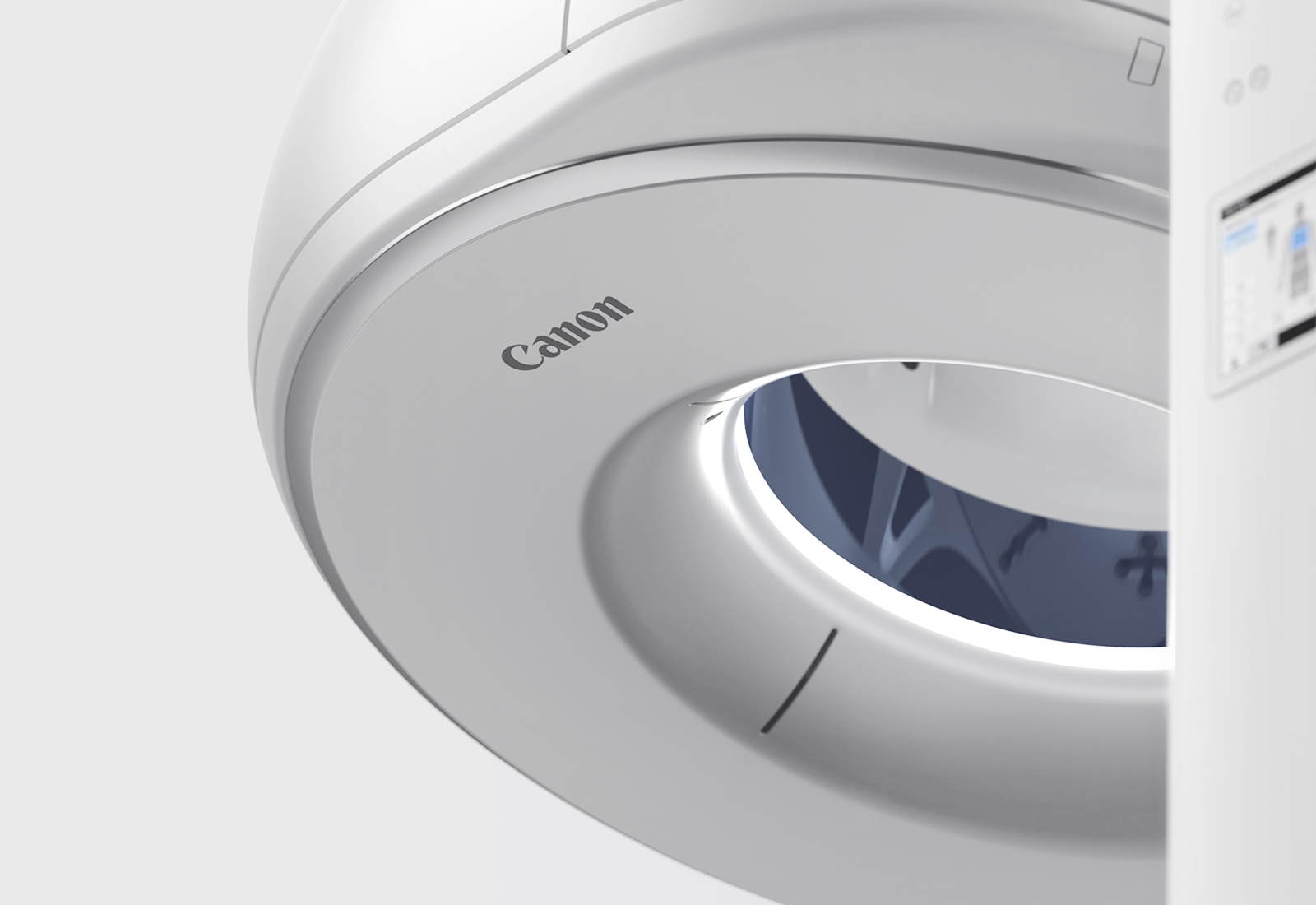
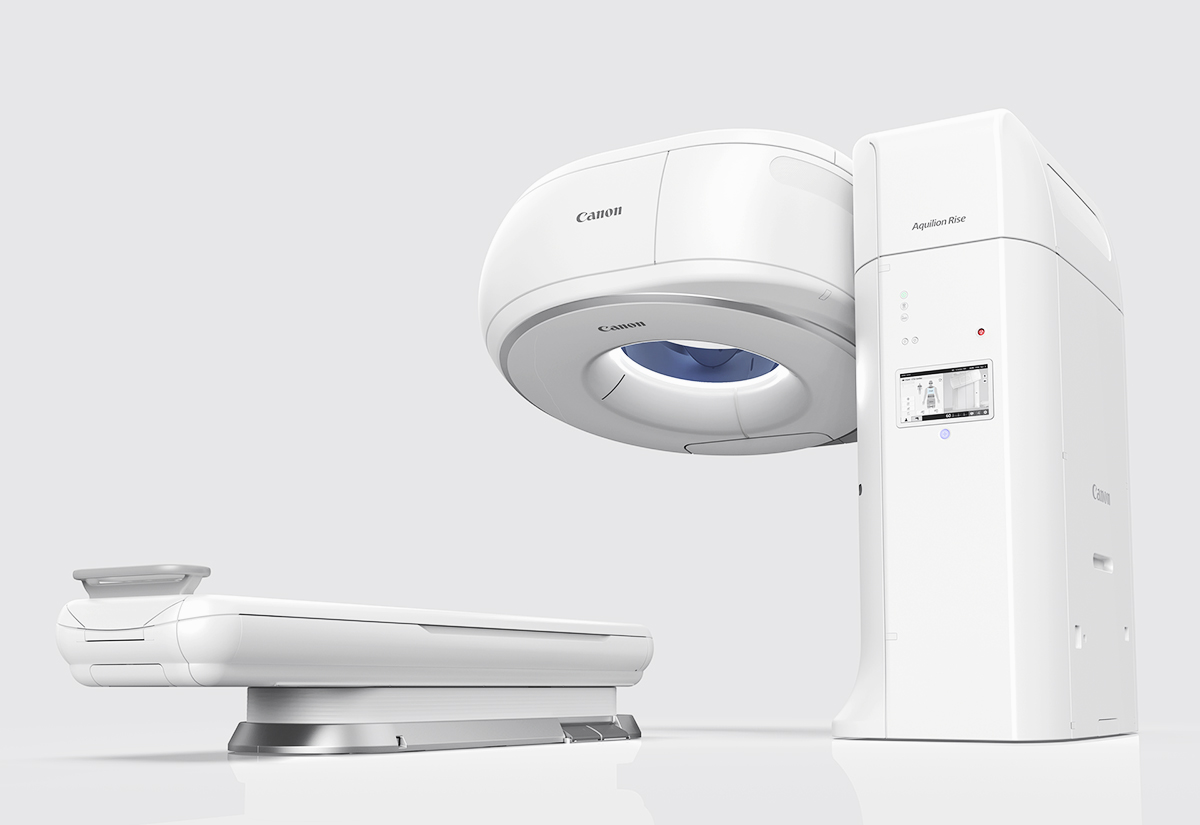
Multi-position CT scanners perform imaging for three scanning postures—supine, standing, and sitting—with a single unit. They use a cantilever gantry structure in which the scanning unit is supported by a single stand. This mechanism is the product of clinical research by Keio University Hospital on standing imaging, conducted as part of a research collaboration between industry and academia. The advances made in this collaboration led to the joint development of a multi-position CT scanner that accomplished the project's initial objective of performing imaging for standing, sitting, and supine subjects, all with a single device. The device's revolutionary shape, derived from the project's findings and clinical needs, is the product of precise design focused on experiential value, both of the people who perform imaging and the people who undergo it.
Eliminating Corners to Eliminate Anxiety
Multi-position CT scanners are able to scan patients in three different postures by raising, lowering, and rotating the scanning unit 90 degrees. For standing and sitting scans, the donut-shaped scanning unit can rise up above the patient's head. The movement of this massive structural component makes some patients inside the device feel nervous or scared. The confined space sometimes prompts a feeling of claustrophobia.
What can design do to alleviate patients' anxiety? We identified the issues involved from the perspectives of both patients and medical staff, and we explored possible solutions. One solution we arrived at was eliminating the corners of the stand and the scanning unit, which were large and blocky. We decided to give the entire device a soft, curvy form.
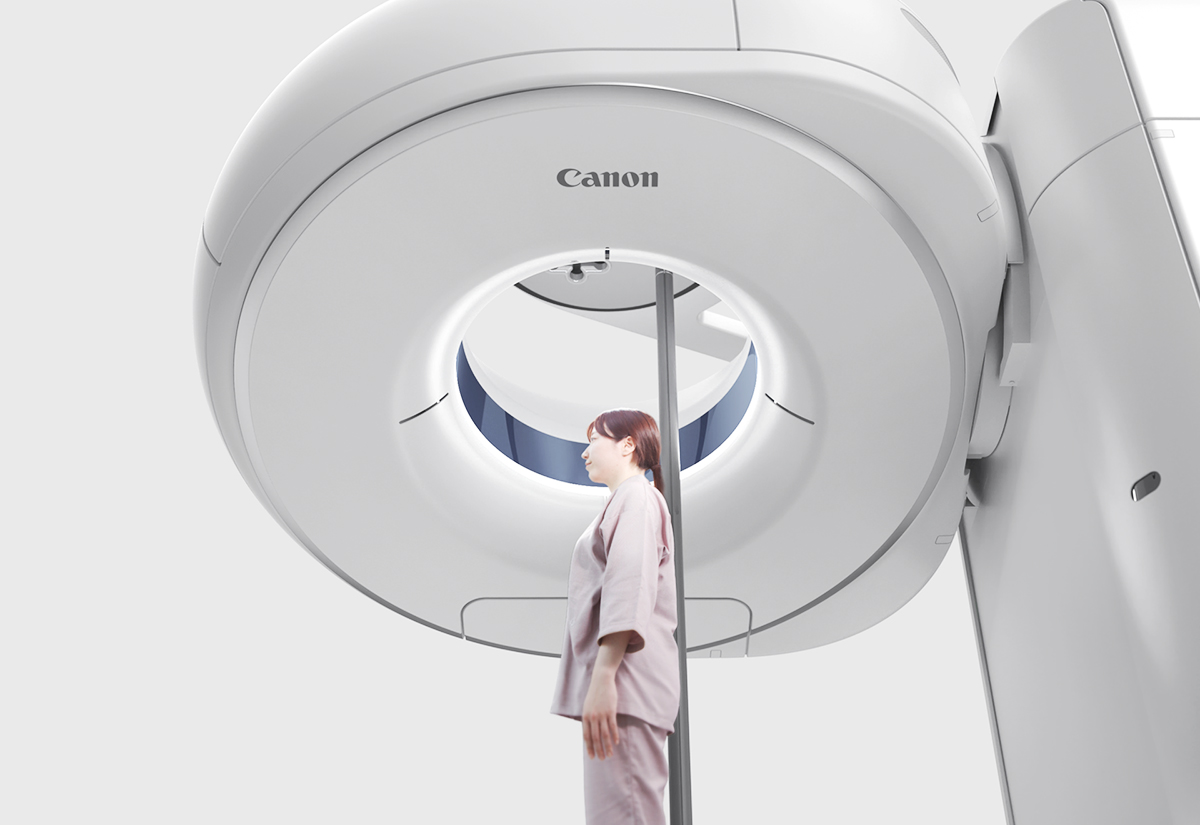
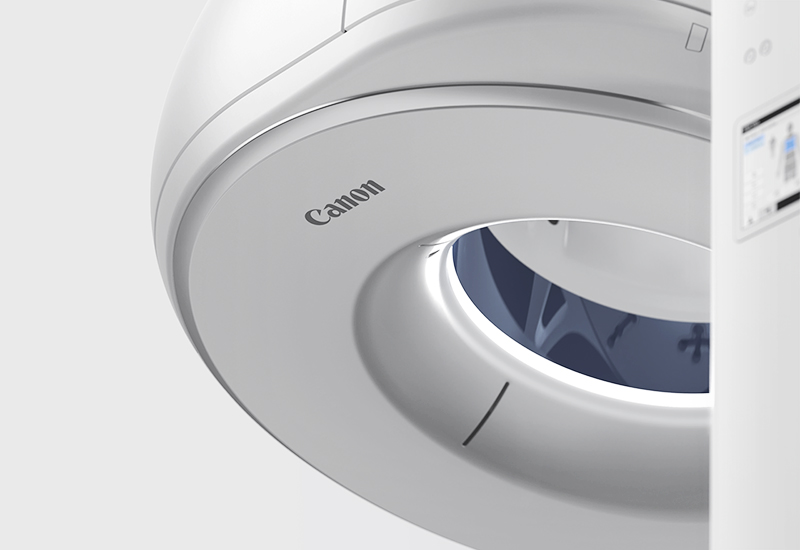
The rounded edges of the device give an impression of lightness and gentleness. We also cut away at the interior of the scanning unit, making its opening larger to make it feel less oppressive. The wider field of view also makes it easier for medical personnel to see the status of the patient. Removing the stand's corners also provides staff with more working space and shortens their flow lines when walking around the equipment. We used various design techniques to make sure that every aspect of the design took patients and medical staff into consideration.
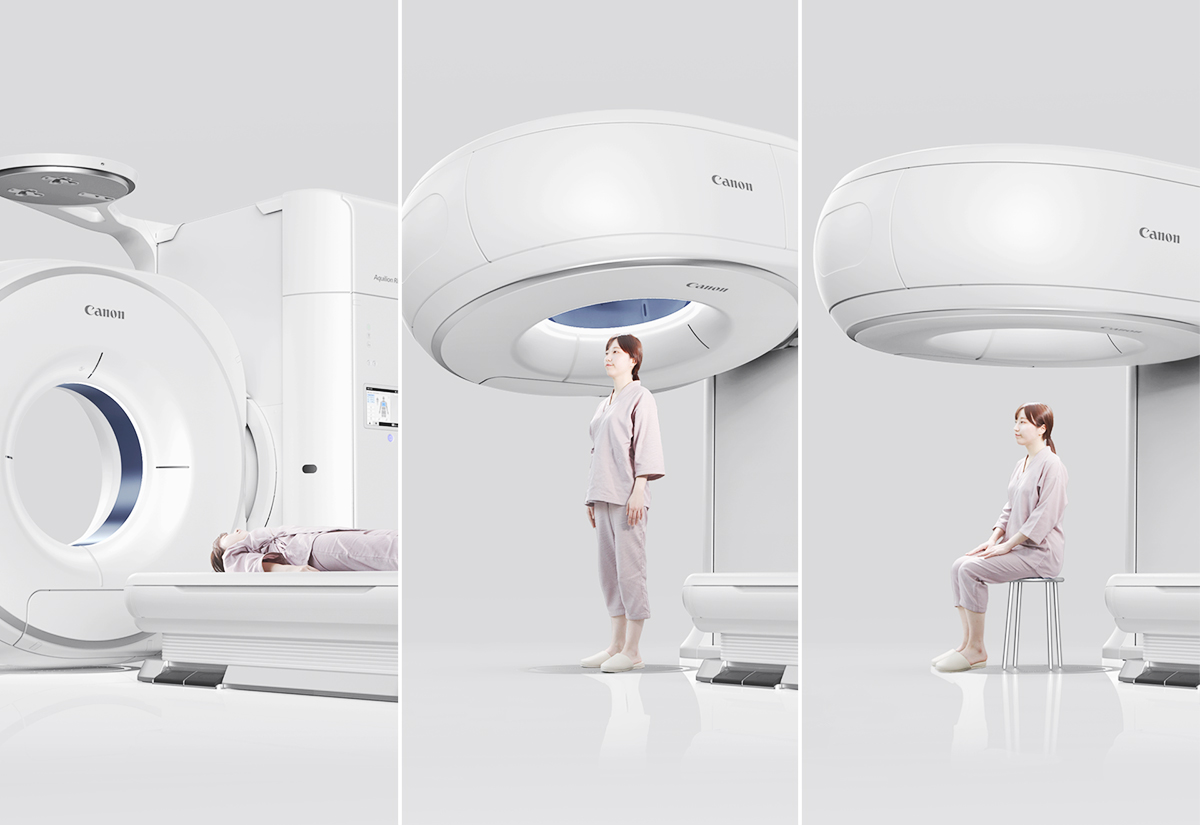
A Device that Moves to Welcome Users
For scanning that is performed on standing patients, it might seem easy for patients to crouch down to enter the horizontal scanning unit, but the reality is that it can place quite a burden on them. To provide patients with greater hospitality throughout the scanning process, it's important that they enjoy both peace of mind and comfort. Our thinking was that if, instead of having the patient crouch to get into the device, we had the device move to make it easier for the patient to enter, this could result in less of a burden being placed on the patient while also making them less anxious. That's the concept that led to our idea of how to lead patients into the device: we had the scanning unit tilt upward, like a camera, to welcome patients to come in. This made the scanner exceptionally accessible and enabled even tall patients to enter and exit the scanner with ease and without stress. It also made it possible to rapidly guide patients to the correct scanning position.
Using White for a Gentler Feel and a Greater Sense of Reliability
Color is one of the important factors that affect how people feel. We went with a high-purity white for the exterior of the multi-position CT scanner, as it imparts a sense of cleanliness and reliability, key characteristics of medical devices.
White is also a bright color. When people are in bright places, they feel less anxiety. It's like there's less of a load on their shoulders. In the scanning unit's interior, we used the synergy between lighting effects and the color white to create a bright, clean, relaxing space that gently welcomes patients.
The silver ring that circles the scanning unit has the visual effect of making the device look thinner and more compact, as well as heightening the impression it makes as a precision device. The silver harmonizes with the white, tightening up the device's profile and giving it a sense of individuality and character.
A Design that Makes Operation Intuitive
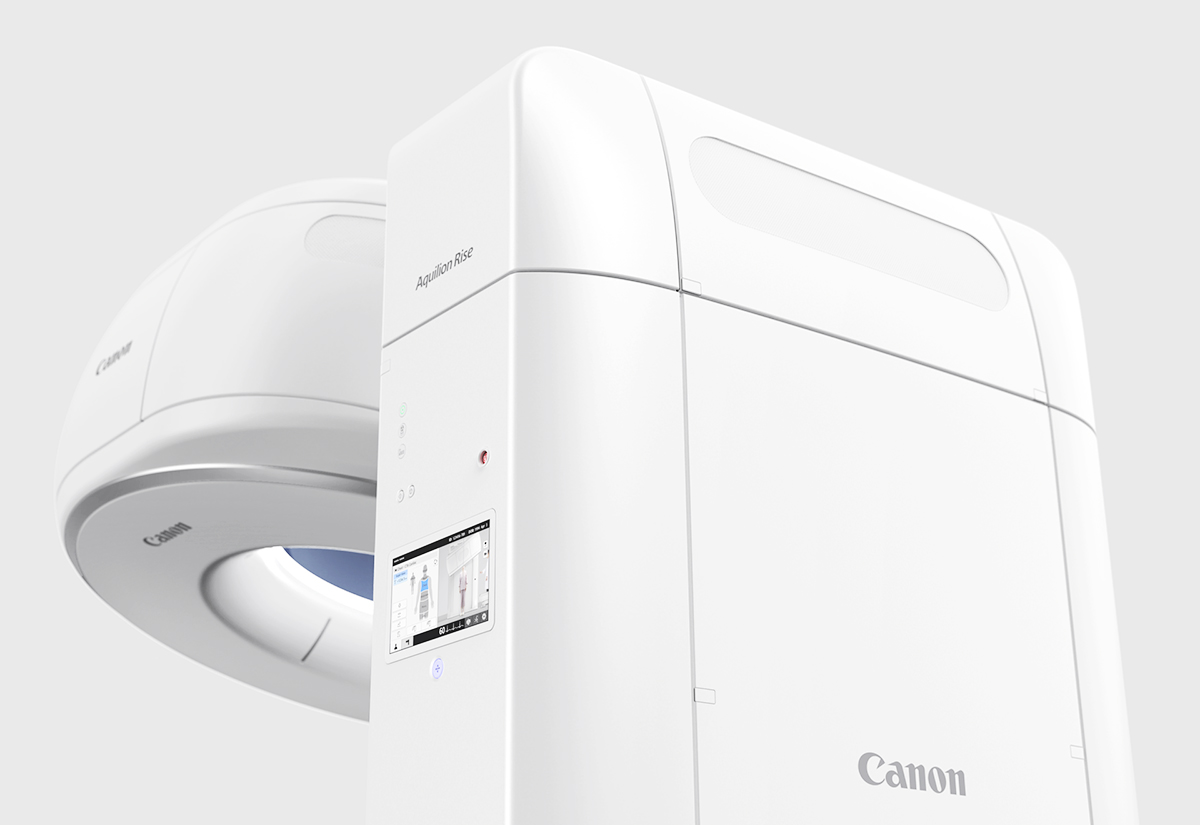
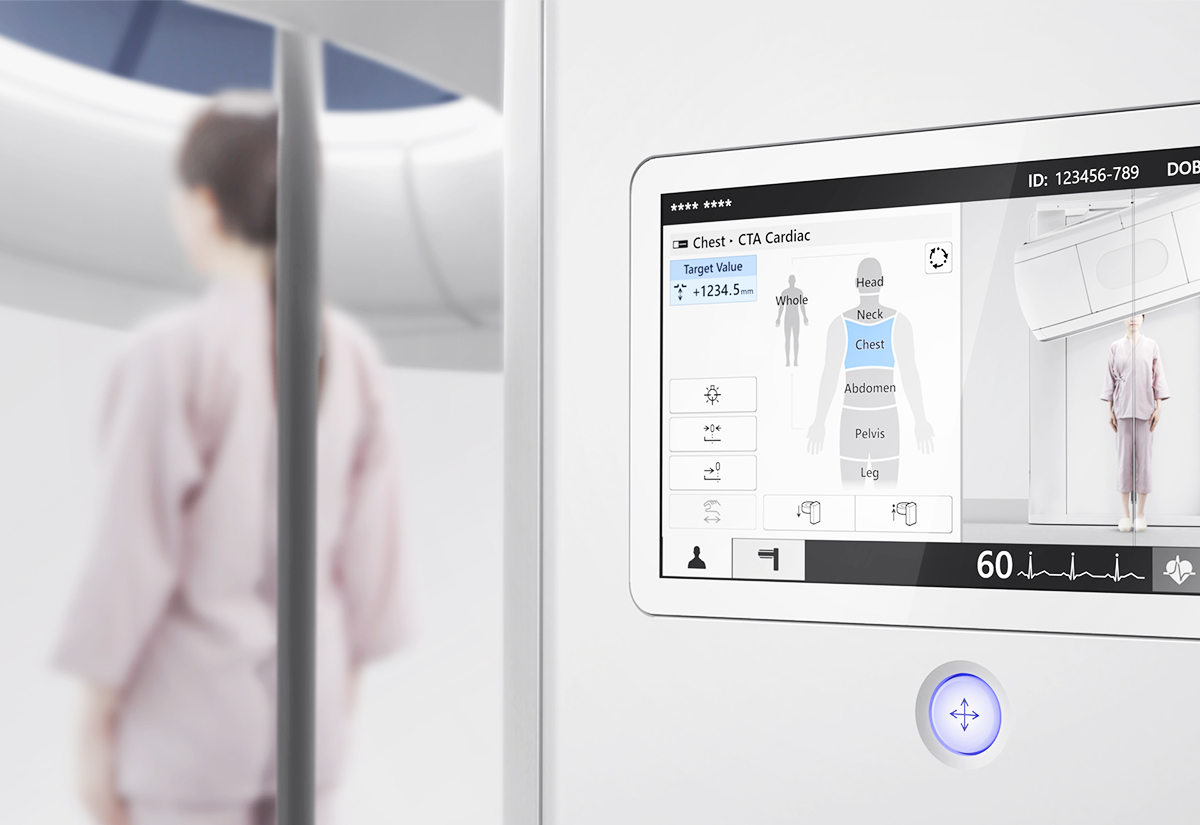
The control panel that medical staff members use to position patients is installed in the stand. To make the interface clear and straightforward, we used a simple structure, consisting of a touch panel and a single button. The scanner automatically moves to the appropriate positioning for the part of the body to be scanned, simply by pushing a button on the human-shaped menu. The panel layout was evaluated using eye-tracking to measure the movement of operators' eyes. We strove to create a smooth operation design with minimal eye movement, where information flows from left to right, top to bottom.
For standing and sitting scans, patients' bodies may be hidden from view by the gantry, which can make it difficult to perform visual confirmation. Even in situations like these, staff members can look at the camera image displayed on the control panel to perform positioning, ensure safety, and efficiently operate the scanner.
Observing People. Photographing People.
Through our design, patients experience the scanner as gentle, open, bright, and easy to enter. This alleviates their anxiety and helps them approach diagnostics in a positive manner. Our design also creates an imaging environment that makes it easy for healthcare workers to see, move around, and operate, which results in higher quality imaging and diagnosis. Our goal was to design equipment that enables patients to enjoy peace of mind during imaging while also promoting more accurate pathology evaluations. We took on each of the various challenges involved, one by one. We thought about what we could do for people, which is ultimately who the scanner is for, and we turned our ideas into reality.
The multi-position CT scanner we developed, with its unique shape, has been recognized for its cutting-edge technologies, usability, and design. It was selected for the 2025 GOOD DESIGN BEST 100, the Gold Selection Award in the JIDA Design Museum Selection, and the Gold Award in the iF Design Award 2026.
Its balance of precision components and soft elements, and the techniques used to make it appear more compact, leverage the technologies and experience we have built up through our camera designs. Canon's approach is one of observing people and photographing people, and it applies this exact same approach in the medical field, as well.
With our design, we wanted to bring greater peace of mind and comfort to healthcare settings. It is our heartfelt desire to create a future in which patients around the world can undergo diagnostic testing with a feeling of optimism and positivity.
Related Links

Doing All I Can to See the World Through the Eyes of Patients
What's important to me is to keep my eyes focused not on devices but on the people that use them. I look at healthcare settings from the perspectives of patients and healthcare workers. I identify their sources of anxiety and what makes their jobs harder, and I try to rise to their expectations. I believe that this steady, ongoing progress culminates in designs that provide better experiences and generate new value.
Seishiro Takano, Canon Design Center
Art Direction: Hiroshi Goto / Photo: Kei Hayakawa
Canon Design Center
List of Frontline Content
Multi-Position CT Scanner*
Adastra
varioPRINT iX1700
Icon Design System

EOS R5 Mark II

EOS R1
- * The collective term for CT scanners that can perform supine, standing, and sitting scans